

Projektplanen
(Klicka på bilden för att se den i större format)
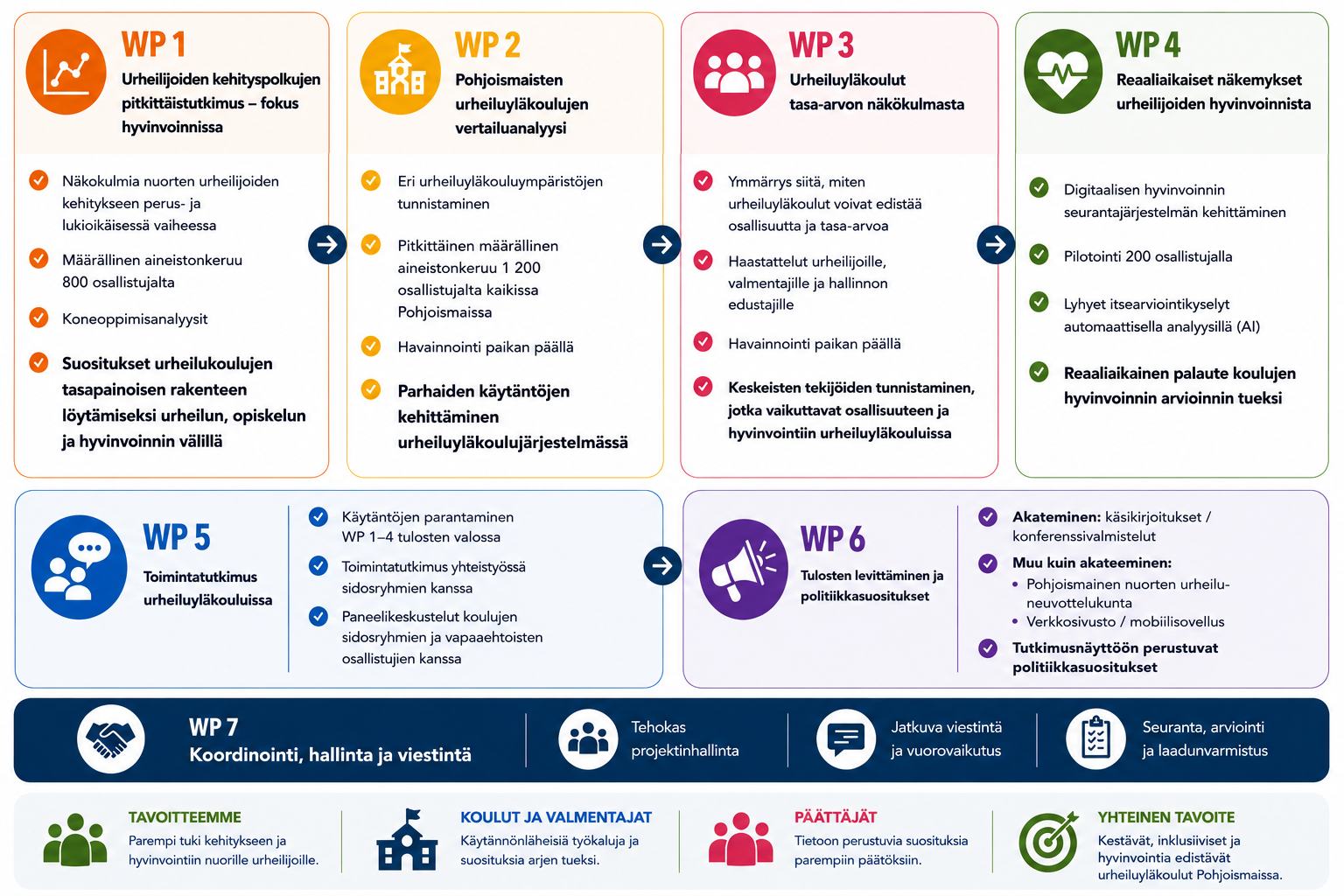
En flyer (på finska) om projektet AI-WELL.


Sökmaskinen är ÅA-webbens hjärta. Allt vårt innehåll ligger på endast några tangenttryckningars avstånd. Då du skrivit de första bokstäverna av ditt sökord börjar sökmotorn presentera förslag, som dessutom indelas i olika kategorier. Ju mer du skriver, desto noggrannare blir sökträffarna.
Tid
1.9.2026 – 31.8.2029
Projektägare
Åbo Akademi
Samarbetsparter
Finansiär
Budget
640 698 euro
Åbo Akademis del av budgeten
640 698 euro (100%)
Projektet AI-WELL har som syfte att optimera studerande idrottares utveckling inom den nordiska modellen för idrottsutbildning samt att generera datadrivna insikter för att stärka ungdomars välbefinnande i ett bredare perspektiv. Idrottsskolor har blivit ett allt vanligare sätt att kombinera elitsatsning och skolgång från 13 års ålder, både på högstadie- och gymnasienivå i de nordiska länderna, men det finns fortfarande begränsad kunskap om deras långsiktiga effekter på utveckling och prestationsresultat.
Med utgångspunkt i ett unikt longitudinellt datamaterial med över 800 finländska studerande idrottare kommer projektet att följa de studerande idrottarnas utveckling över tid under deras år i högstadiets idrottsskolor, och omfatta cirka 1 200 studerande idrottare i fem nordiska länder. Med hjälp av innovativa maskininlärningstekniker och en mixed methods-design är AI-WELL organiserat i fem arbetspaket:
• (WP1) longitudinella analyser av ungdomars utveckling från högstadiet till gymnasiet.
• (WP2) tvärkulturella jämförelser av idrottsskolors system för att identifiera bästa praxis inom idrottsutbildning i Norden.
• (WP3) undersökning av könsnormer, välbefinnande och social tillhörighet i idrottsskolemiljöer.
• (WP4) utveckling och testning av ett digitalt system för att övervaka välbefinnande och identifiera riskmönster hos studerande idrottare.
• (WP5) deltagande aktionsforskning för att gemensamt utveckla praktiska och policyrelaterade rekommendationer för en hållbar nordisk modell för idrottsutbildning.
Genom att kombinera högkvalitativa longitudinella data med prediktiva maskininlärningsmodeller har projektet potential att utveckla teori och metod över discipliner samt etablera nya metoder för att analysera komplexa datamängder inom psykologi och utbildningsvetenskap. Tack vare sin starka grund kommer AI-WELL att generera kunskap med potential att förbättra ungas välbefinnande och hälsa i hela Norden och inom olika utbildningssystem.
(Klicka på bilden för att se den i större format)
En flyer (på finska) om projektet AI-WELL.
