

Habitability – Results


On this page we gather Habitability analyses of different islands.
Table of contents:
- Föglö / Åland
- Kumlinge / Åland
- Sottunga / Åland
- Pellinge / Nyland
- Emsalö / Nyland
- Vessö / Nyland
- Sibbo Western and Central archipelago / Nyland
- Sibbo Eastern archipelago / Nyland
- Västanfjärd / Engentliga Finland
Föglö / Åland
The island
Föglö is situated in the eastern part of the Åland Islands. Föglö has 501 registered residents living on several large islands separated by narrow straits, connected by bridges, banks and a cable ferry. A ferry links Föglö to Åland in 30 minutes.
The study
Note! Föglö evaluated 30 indicators out of 45, since the local coach was mainly unaided and had weak support from the municipality. However, interest in the work grew stronger at the end of the project, so hopefully the rest of the indicators will also be examined at a later stage. Only two workgroups were organised – one in Ecology and one in Local economy. The municipality board had one preparatory meeting regarding the project.
About 30 islanders took part in making the analysis, and 46 persons answered the Livet på Föglö-questionnaire.
The project, which ran nine months during 2022–2023, was financed by Leader Åland rf and commissioned by Företagsam Skärgård, an inter-island cooperation in the archipelago of the Åland Islands.
The outcome
According to the habitability analysis, the human pressure on Föglö based on person-days is 796 persons (compared to 501 persons according to statistics). The distance between Degerby on Föglö and the capital city of Åland, Mariehamn, is 35 km, while the perceived distance would place Degerby 90 km from Mariehamn.
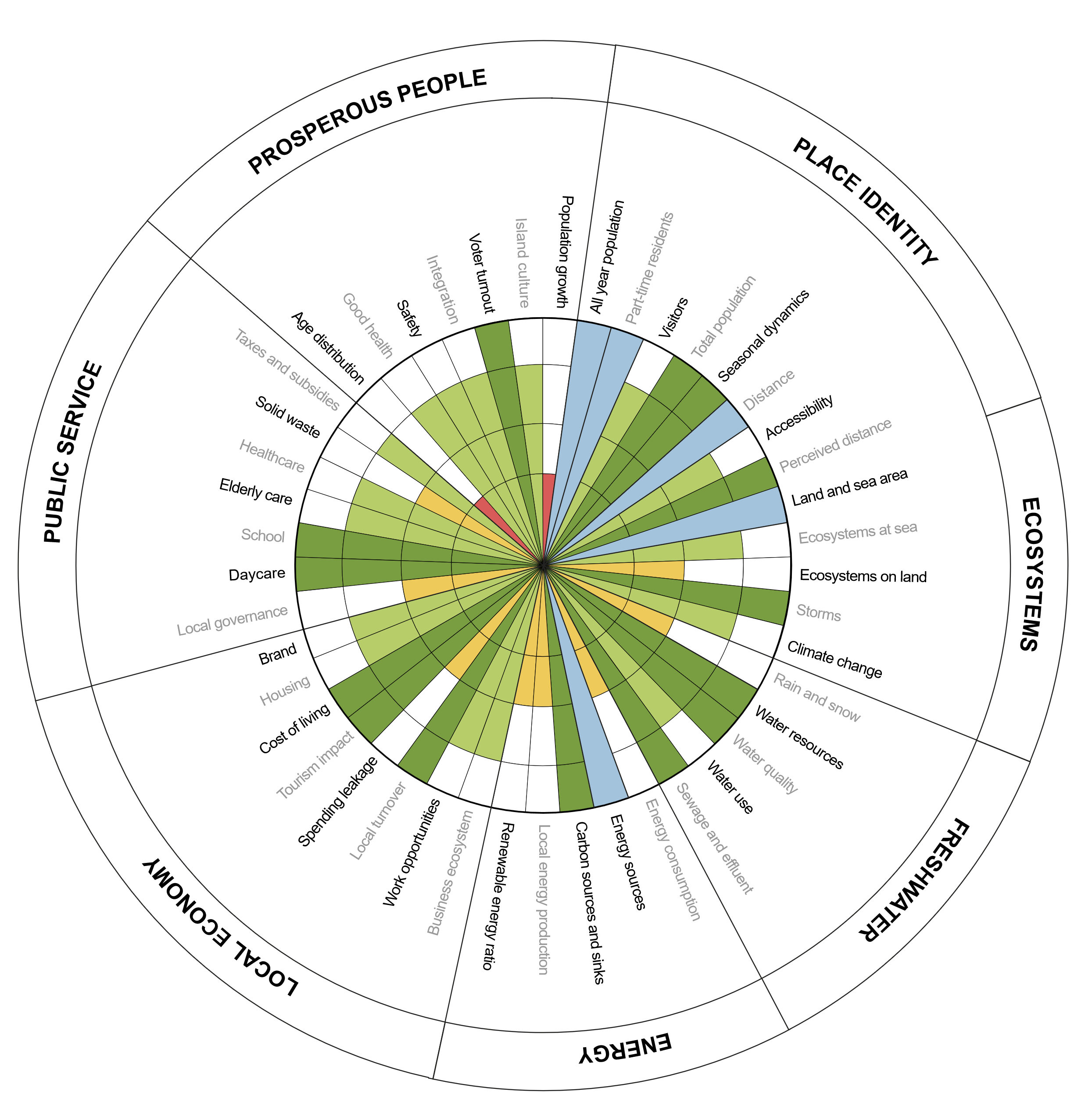
Föglö is by proof a safe and secure place to live. The island scores high for public service and for the health and well-being of its citizens. However, age distribution and population growth are worrying indicators. Föglö has for a long time been the wealthiest island in the Åland archipelago, but there is an undeveloped business ecosystem on the island and the local economy as a whole was poorly examined. According to the survey, many islanders experienced that there is a poor accessibility to service, although accessibility according to the criteria in the handbook scores high. The only indicator examined in Energy is marked as red; energy consumption.
The biggest challenges for Föglö are the upcoming, huge investments in water and sewage systems, which have no evident financing solution.
The whole report (in Swedish) is published here.
After the study
The results will be discussed by the municipality board. The residents can download the report from the municipality’s web pages.

Kumlinge / Åland
The island
Kumlinge is situated in the eastern part of the Åland Islands. The municipality has 305 registered inhabitants who reside on four islands: Kumlinge, Enklinge, Seglinge and Björkö. None of these are bridged and the islands are served by six different ferries.
The study
The habitability project ran nine months during 2022–2023 and was commissioned by Företagsam Skärgård, an inter-island cooperation in the archipelago of the Åland Islands. The project was financed by Leader Åland rf. The project was very successful due to two very committed and active local coaches, Airi and Satu, who enjoyed strong support from both the municipality’s staff, the local politicians, and the local society. Seven working groups were organised, one for each area of the analysis. One third of the islands’ population was engaged in the study.
The outcome
According to the habitability analysis, the human pressure on Kumlinge based on person-days is 388 persons (compared to 305 persons according to statistics). The distance between Kumlinge and the capital city of Åland, Mariehamn, is 95 km, while the perceived distance would place Kumlinge 225 km from Mariehamn.
Kumlinge has high rates when it comes to the health and well-being of its citizens. The island scores high for public service, and both housing and tourism scores a 4. However, the island has an undeveloped business ecosystem, and all three assessed indicators in Energy are marked as red: energy consumption, the ratio of renewable energy and locally produced energy.
Kumlinge has a declining resident population.
Kumlinge faces a possible development of sea based wind power in the very northern, uninhabited sea parts of the municipality, which will change the landscape and probably bring wealth to the island community.
The whole report (in Swedish) is published here.
After the study
Having completed the study, the coaches organised feedback meetings with all the workgroups. The study was then presented to the municipality board and council, and to all the inhabitants of Kumlinge, who also received a printed copy of the report in their physical mailboxes.
Sottunga / Åland
The island
Sottunga is situated in the eastern part of the Åland Islands. The municipality, the smallest in the whole of Finland, has 133 registered residents on one large and one small island.
The study
The project ran nine months during 2022–2023 and was commissioned by Företagsam Skärgård, an association for inter-island cooperation in the Åland archipelago, and financed by Leader Åland rf. The work was led by a local coach. Halfway through the project, he had to hand over the responsibility to another person who happened to be the inventor of the concept from the neighbouring island of Kökar. Almost half of the island population, as well as part-time inhabitants, was engaged in the work. Three indicators were not assessed. In surveys, more than half of the islanders answered, in writing. The political support was good.
The outcome
According to the habitability analysis, the human pressure on Sottunga based on person-days is 150 persons (compared to 113 persons according to statistics). The distance between Kumlinge and the capital city of Åland, Mariehamn, is 55 km, while the perceived distance would place Sottunga 189 km from Mariehamn.
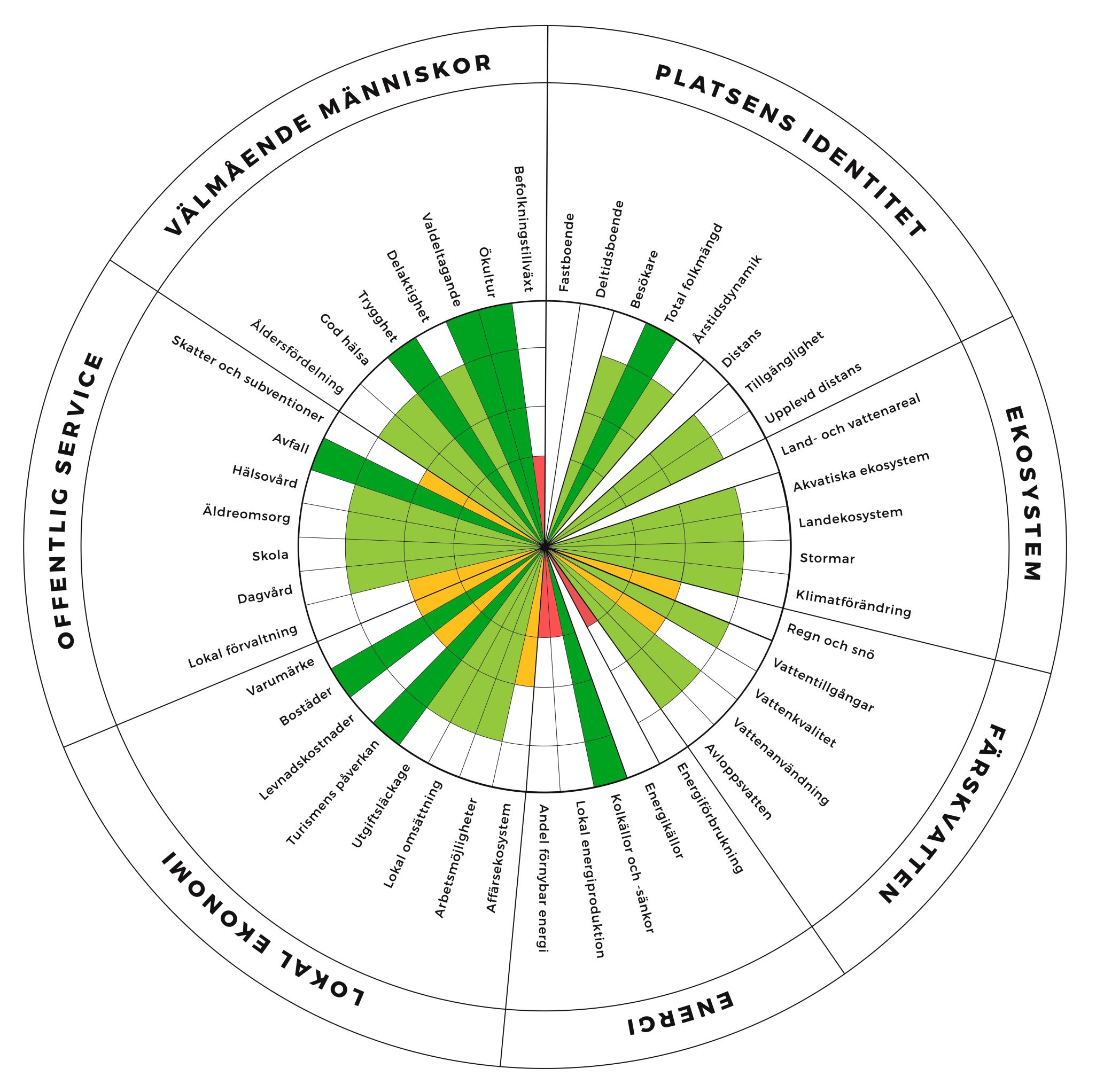
10 indicators received the highest score, very good (4). Out of these, three would have received an even higher, if possible: safety, health and population growth. Sottunga is experiencing an immigration boom, mainly a positive challenge, but also a demanding one since it is putting stress on its tiny local administration. Fifteen indicators were marked with light green (3), which means that 70% of the indicators show an attractive, habitable society.
Seven indicators received a 2 (bad, but not in need of immediate action), while five received a 1 (critical state). Two of these are in the Energy area: energy consumption and the ratio of renewable energy. The freshwater situation is a cause for concern.
The whole report (in Swedish) is published here.
Sottunga’s greatest challenge is the great number of families who have moved into the island during the last two years, counting 20 kids and 11 parents.
After the study
As the Mayor, the Municipality Board and the inhabitants were actively engaged during the last months of the project, everyone was eager to know the results. There is a strong will to make Sottunga even more habitable for everyone, whether born on the island or settlers.
Pellinge / Nyland
The island
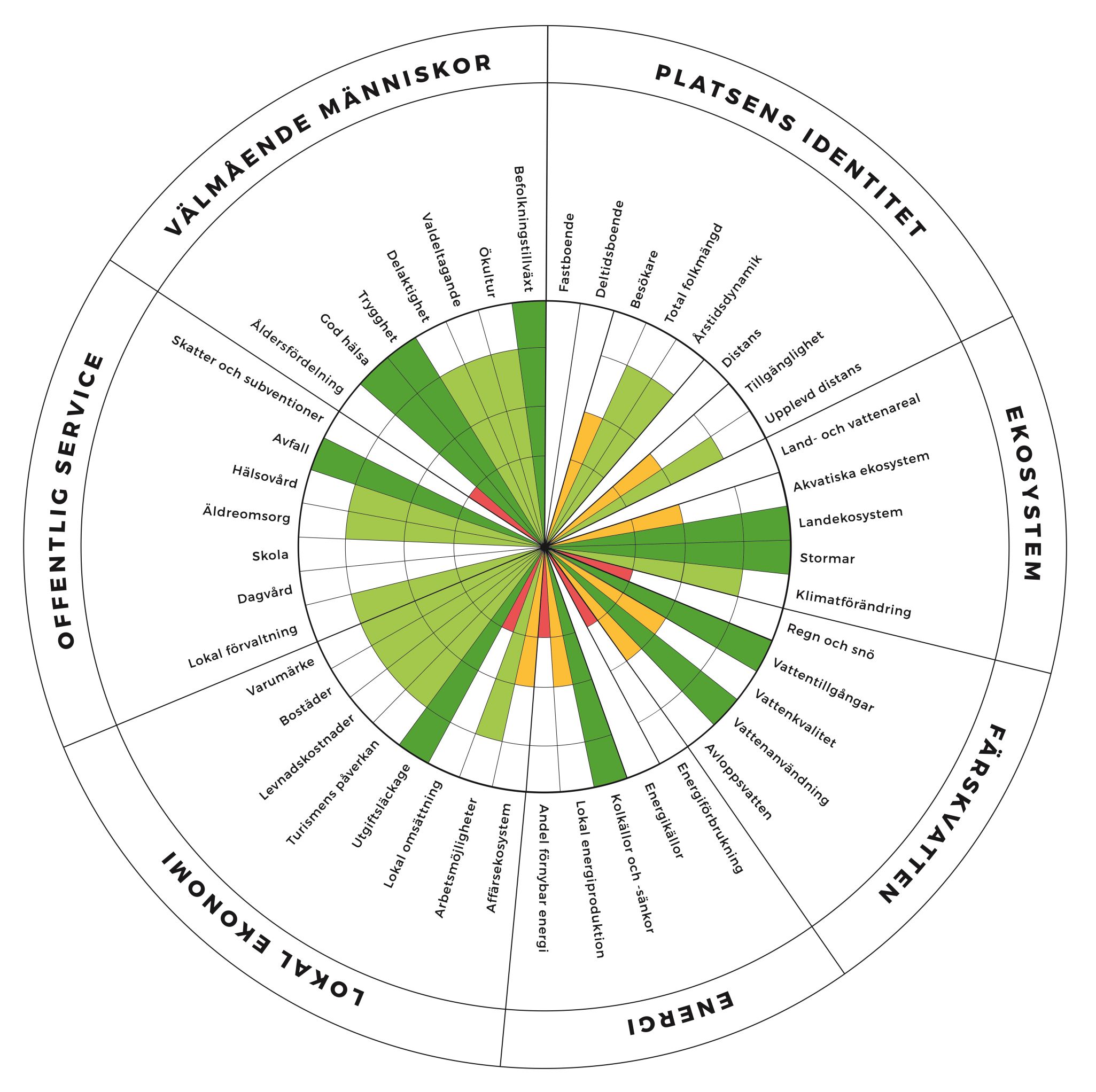
Of the three islands in the Porvoo archipelago that have carried out habitability analyses, Pellinge is the only one that is truly an island, meaning it has no bridge connection. Pellinge is an archipelago consisting of, among others, Lillpellinge, Storpellinge, Tullandet, Ölandet, Sundö, and Klovharun — the latter famous as Tove Jansson’s island.
Pellinge has 247 permanent year‑round residents, 2,134 part‑time residents, and 38,000 visitors per year. On a winter day in January there are approximately 350 people on the island, while during midsummer that number rises to around 4,000.
The study
The habitability analysis conducted in 2023 was led by two dedicated project leaders who, together with a highly active working group, interviewed and engaged many Pellinge residents. One survey was carried out through a closed Facebook group, and a second survey was distributed on paper to all mailboxes as well as via social media and the local shop. In total, the working group received 225 responses in Swedish and 58 in Finnish. A large village meeting was held in September and a meeting with entrepreneurs in November.
The project received support from Posintra, the City of Porvoo, and Åbo Akademi University. The project leaders also offered significant support to the habitability studies on the neighboring islands of Emsalö and Vessö.
The outcome
The perceived distance to Pellinge is roughly twice the actual distance due to the ferry crossing and waiting times.
The analysis gives Pellinge high scores (4) regarding climate change, local turnover, and the school. The impacts of climate change on Pellinge were assessed by expert biologists, ecologists, entomologists, ornithologists, botanists, and Pellinge residents. The gross local product is 10 percent higher per capita than the national average. The Swedish‑language school is located in Grännäs on the mainland, 5 minutes from the ferry pier, and receives very high ratings in the analysis — as does the Finnish‑language school (both receive a 4).
Indicators receiving low scores (1) include spending leakage: 82 % for goods that can be purchased on the island, and 91 % for all goods and services combined. However, the price level on the island is not unreasonably higher than on the mainland.
Low ratings are also given to visitor pressure and thus the total population load which, when counting permanent residents, part‑time residents, and visitors, corresponds to a constant population of 1,029 people. This is four times the number of registered inhabitants. There is a shortage of housing, the average age is high (50 years), and the population has decreased by 7 percent since 2011, with a particularly sharp decline between 2017 and 2021.
You can find Pellinge’s full habitability report here (in Swedish).
After the study
Erika Englund from Pellinge, Carina Nyholm from Vessö, John Rönnholm from Emsalö, and Christian Pleijel from the Archipelago Institute at Åbo Akademi presented the habitability analyses to the Porvoo City Committee for Vitality on 19 March 2024.
A report from the meeting can be found on YLE, including comments by Erika Englund.
Emsalö / Nyland
The island
Emsalö is one of three islands in the Porvoo archipelago. Since 1992, it has had a fixed connection to the mainland. The number of permanent residents is 373. There are also 472 summer cottages on the island, and it is visited by 79,500 people during spring, summer, and early autumn. Most visitors want to go all the way out to Varlax Udde, at the far end of the island’s narrow and winding road. Using the UN’s tourist‑to‑local ratio, Emsalö has a staggering 213 tourists per permanent resident. The island’s land area is 34 km², and the surrounding sea area is 43 km².
The study
The analysis was conducted in 2023 by a habitability working group composed of year‑round residents, part‑time residents, newcomers, entrepreneurs, and people with multigenerational knowledge of the island. The group met once a week. They also reviewed the partial master plan. In October 2023, a survey was carried out among island residents, yielding 330 responses. An island evening was organized on 11 October with 70 participants. The completed habitability report was presented in two languages at an open public island meeting on Tuesday, 5 March 2024.
The project received support from Posintra, the City of Porvoo, Åbo Akademi University, the Per Spakis Foundation, as well as the neighboring islands of Vessö and Pellinge.
The outcome
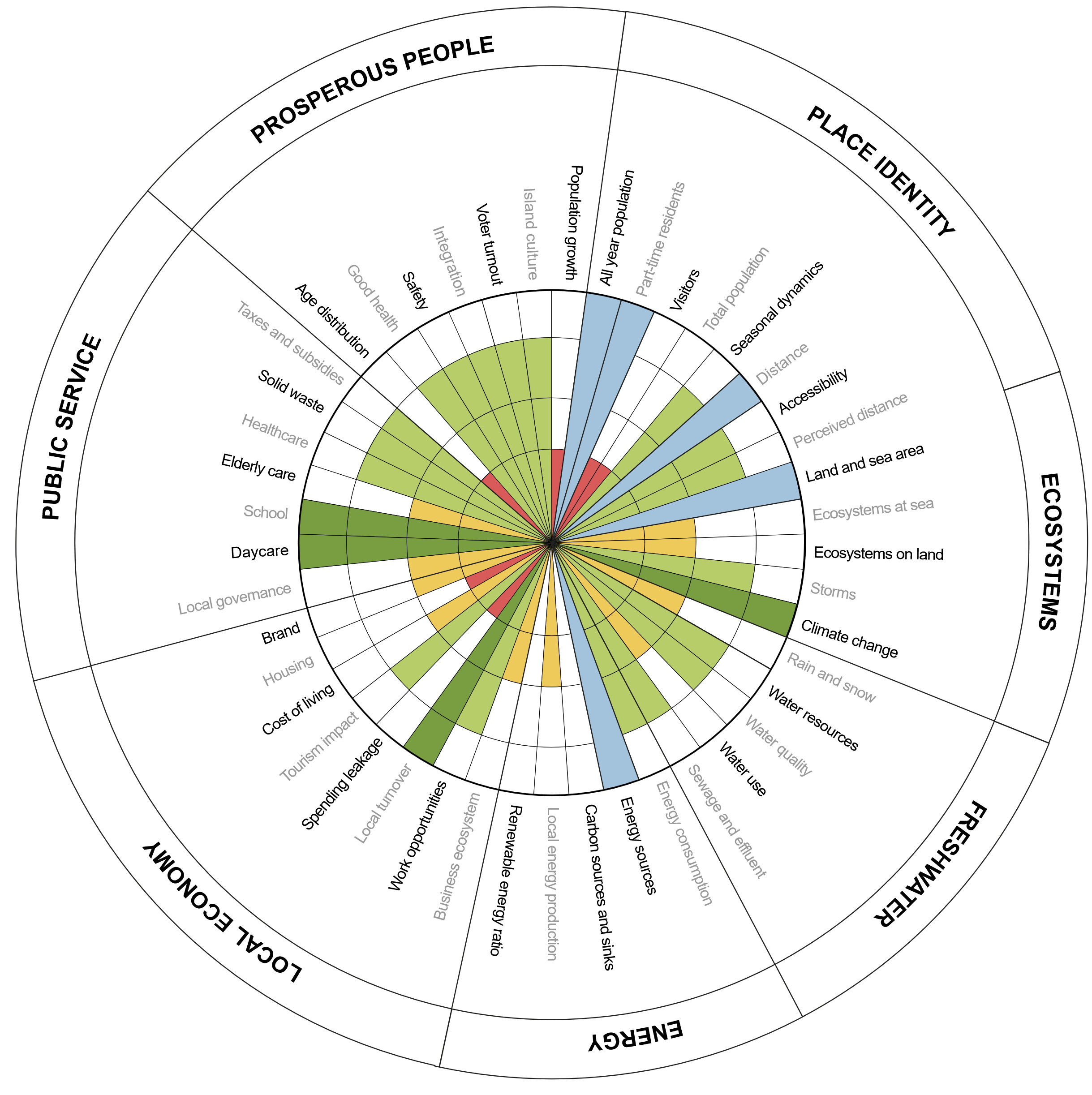
The Emsalö habitability report is exceptionally thorough. The working group may perhaps be somewhat modest compared to other islands that have conducted similar analyses. They identified only four indicators deserving the highest score (4): seasonal dynamics, accessibility, carbon sources/sinks, and tourism impact. However, there are eight indicators graded with the lowest score (1): business ecosystem, spending leakage, cost of living, daycare, school, healthcare, and age distribution.
Accessibility is good—Porvoo and Helsinki are nearby, and the perceived distance is shorter than the actual one (thanks to the bridge). This may mean some indicators were assessed too strictly. Schools, elderly homes, and healthcare services are on the mainland roughly 4–15 km away, while the island itself has a village shop, pharmacy, Alko and cash‑withdrawal services, book bus, fuel, cafés, hotel, chapel, conference facilities, property and excavation services, boatyard, and sawmill.
The age distribution is critical, with an average age of 48, resulting in a high dependency ratio for those in working life. However, Emsalö residents feel very well and very safe: “Life is not so hectic on the island.” The population declined slightly between 2011 and 2020 but grew again from 2020 to 2021. If part‑time residents who in practice live in their part-time homes year‑round were counted, the population would be double. Development is guided by the partial master plan from 2001. You can find the full Emsalö habitability report here.
You can find Emsalö’s full habitability report here (in Swedish).
After the study
John Rönnholm from Emsalö, Carina Nyholm from Vessö, Erika Englund from Pellinge, and Christian Pleijel from the Archipelago Institute at Åbo Akademi presented the habitability analyses to the Porvoo City Committee for Vitality on 19 March 2024.
A report from the meeting can be found on YLE.
On Wednesday, 10 April, an open meeting on archipelago issues was held in Porvoo at Lyceiparkens School.
An unexpected outcome is that Emsalö, Vessö, and Pellinge have begun to collaborate.
Vessö / Nyland
The island
Vessö, or Vessölandet, is an island sized 12 x 5 kilometre, and separated from the mainland by the narrow strait Fladan, over which there is a 10‑metre‑long bridge. In 2022, the island had 532 registered inhabitants. There are also 560 holiday homes and around 50 permanently inhabited caravans. Using Telia Crowds’ measurements of mobile phone subscriptions, the annual number of visitors can be estimated at approximately 180,000. Despite the official statistics claiming that Vessö has 532 residents, the actual human pressure on nature and the local community corresponds to 1,349 people, every day, year-round.
The study
The habitability analysis was carried out in 2023 by a working group which, among other things, collected input through a survey. The project received support from Posintra, the City of Porvoo, Åbo Akademi University, and the neighbouring islands of Emsalö and Pellinge.
The outcome
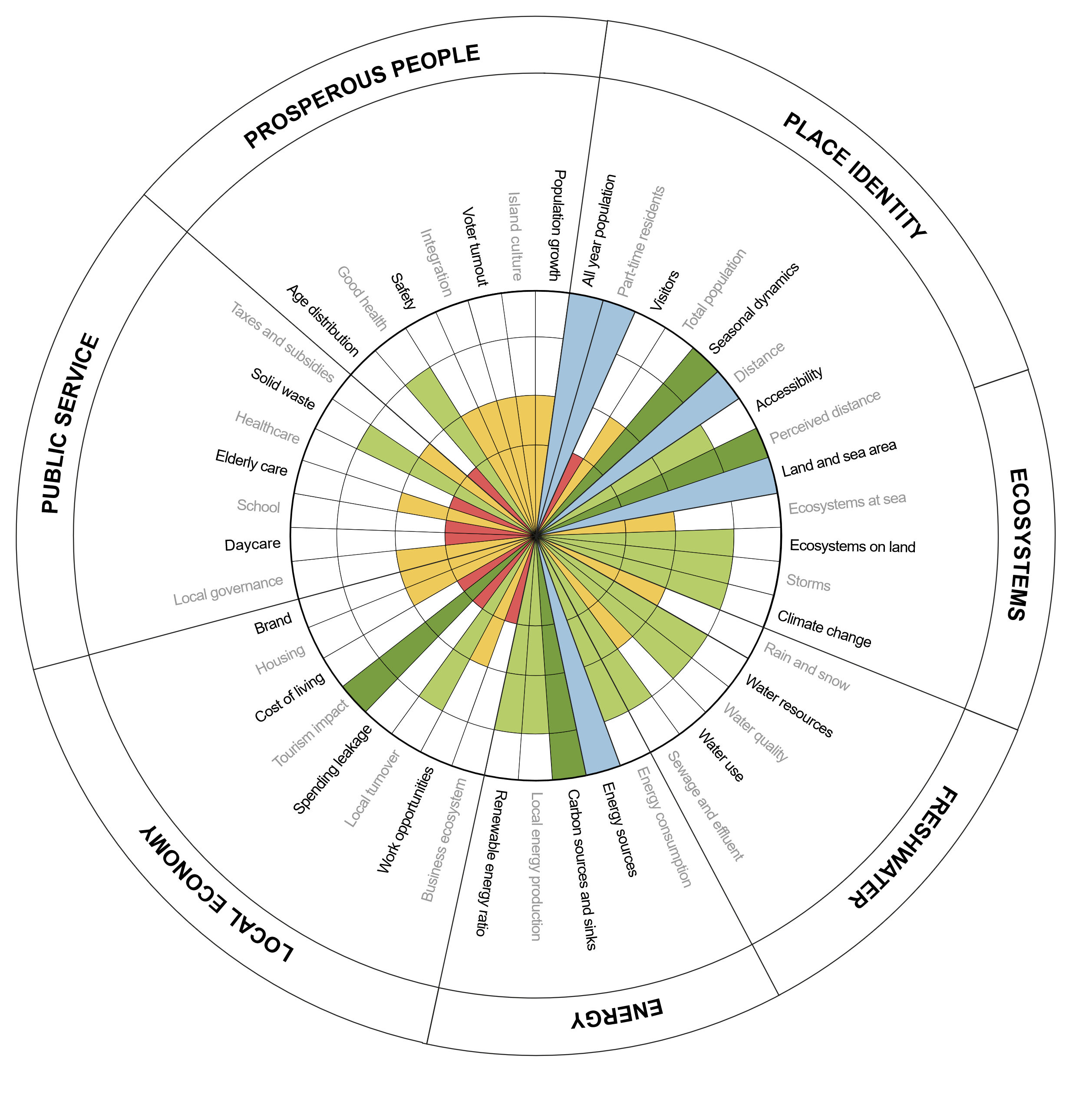
Indicators with high, positive values include wastewater management, perceived distance, carbon sources/sinks, local turnover, tourism impact, and age distribution. Vessö’s population decreased by 12 percent, from 599 people in 2010 to 532 in 2022, but the age structure is balanced: 16 percent are youth aged 0–15, 67 percent are of working age, and 17 percent are 65 or older.
Accessibility is good: it is 10 km to Porvoo, 47 km to Loviisa, 57 km to Helsinki Airport, and 63 km to Helsinki. On Vessö there is a clothing shop, potato and vegetable sales, a summer café, tractors and excavators, a voluntary fire brigade, fibre network, and a restaurant.
Vessö no longer has a school. The habitability analysis shows that residents are not moving away, rather, the ageing population is naturally diminishing, while new residents are prevented from moving in due to building rights and Porvoo’s zoning policies.
Negative scores for Vessö relate to visitor numbers, spending leakage, cost of living, local governance, and negative population growth.
Few people from outside the island come there to work, and the existing businesses provide employment mainly for their owners. Local prices are high (+25%), and spending leakage is significant because so few goods and services can be purchased on the island.
You can find Vessö’s full habitability report here (in Swedish).
After the study
Carina Nyholm from Vessö, John Rönnholm from Emsalö, Erika Englund from Pellinge, and Christian Pleijel from the Archipelago Institute at Åbo Akademi presented the habitability analyses to the Porvoo City Committee for Vitality on 19 March 2024.
A report from the meeting can be found on YLE.
On Wednesday, 10 April, an open meeting on archipelago matters was held in Porvoo at Lyceiparkens School.
An unexpected outcome is that Emsalö, Vessö and Pellinge have begun to cooperate.
Sibbo Western and Central archipelago / Nyland
The archipelago
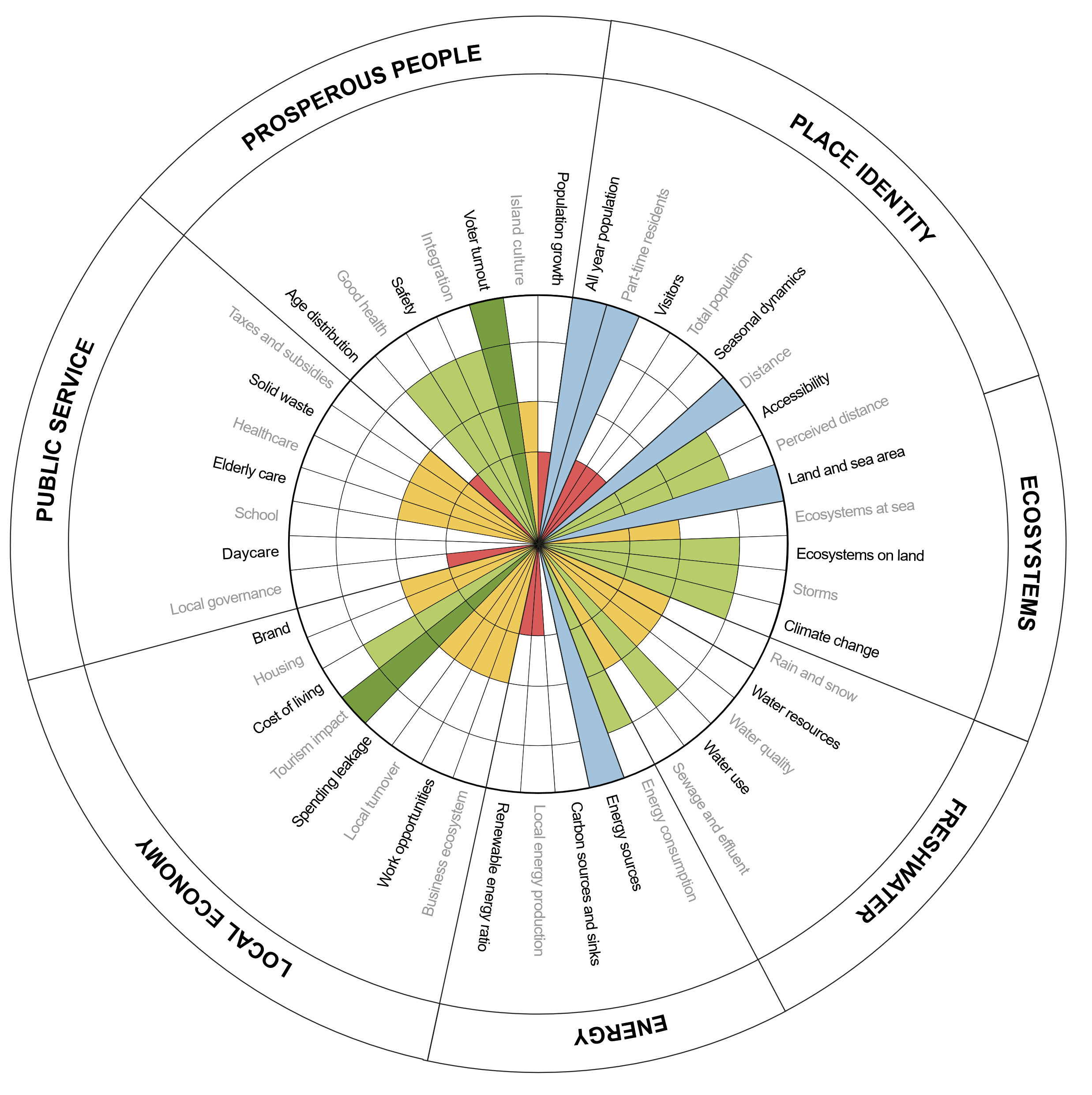
The Siboo archipelago consists of two areas: the western and central parts of the archipelago, which consist of islands without fixed road connections, and the eastern part, where the islands have bridge access to the mainland. This summary concerns the western and central archipelago, where 74 registered residents live on 14 islands with a combined land area of 18 km² surrounded by 356 km² of sea. There are 591 properties, of which 40 are used year‑round, while 414 serve solely as holiday homes.
The study
The study was conducted in 2023 by the Sibbo Archipelago Delegation with the support of the municipality’s long‑standing and committed special planners, one day per week. Members of the delegation participated several times in seminars and discussion meetings and discussed the content of the habitability analysis during their meetings in March, April, and May.
In May, around 30 archipelago residents and part-time residents participated in a community evening. One group worked specifically on the archipelago’s ecosystem. At a meeting in June, the Archipelago Delegation preliminarily approved the habitability analysis for public consultation during the summer. In October, the results were presented to the municipal board.
All indicators have been measured and reported. The introduction and indicators 10–13 are shared between the two archipelago areas.
The outcome
Residents in the western and central archipelago travel by their own boats between the islands and the mainland, and by their own cars on the mainland.
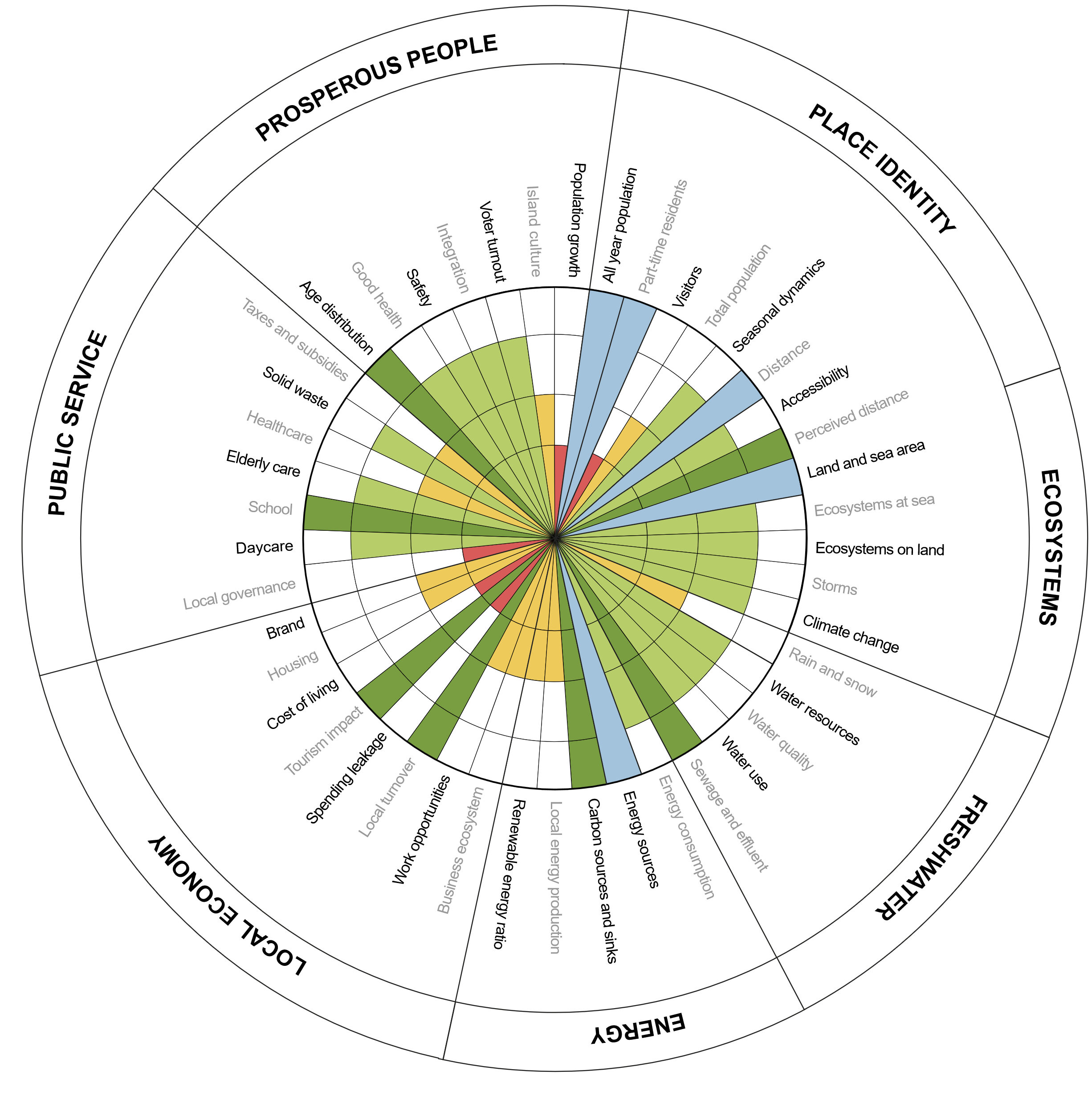
Over the past ten years, the number of permanent residents in the western and central archipelago has declined from 90 to 74, a decrease of 18 percent. Forty percent of current residents are over 65, while the number of children and young people is very low: only six individuals (8%). The habitability analysis shows that public services are perceived as satisfactory (2), except for postal delivery, which in May 2023 was reduced from five times per week to once per week. Water and sewage networks are currently being expanded to the central archipelago, while the western area still relies on individual systems.
The Vuosaari (Nordsjö) harbour, located immediately west of the western Sibbo archipelago, has 3,000 ship visits per year, causing pollution and affecting safety and preparedness.
Sibbo’s full habitability report is available here (in Swedish).
After the study
Members of the Sibbo Archipelago Delegation, the municipality’s special planners, and a representative from Åbo Akademi presented the habitability analysis report in detail to the municipal board on 9 October 2023. The board discussed the matter, expressed its appreciation, and recorded the report for information.
Sibbo Eastern archipelago / Nyland
The archipelago
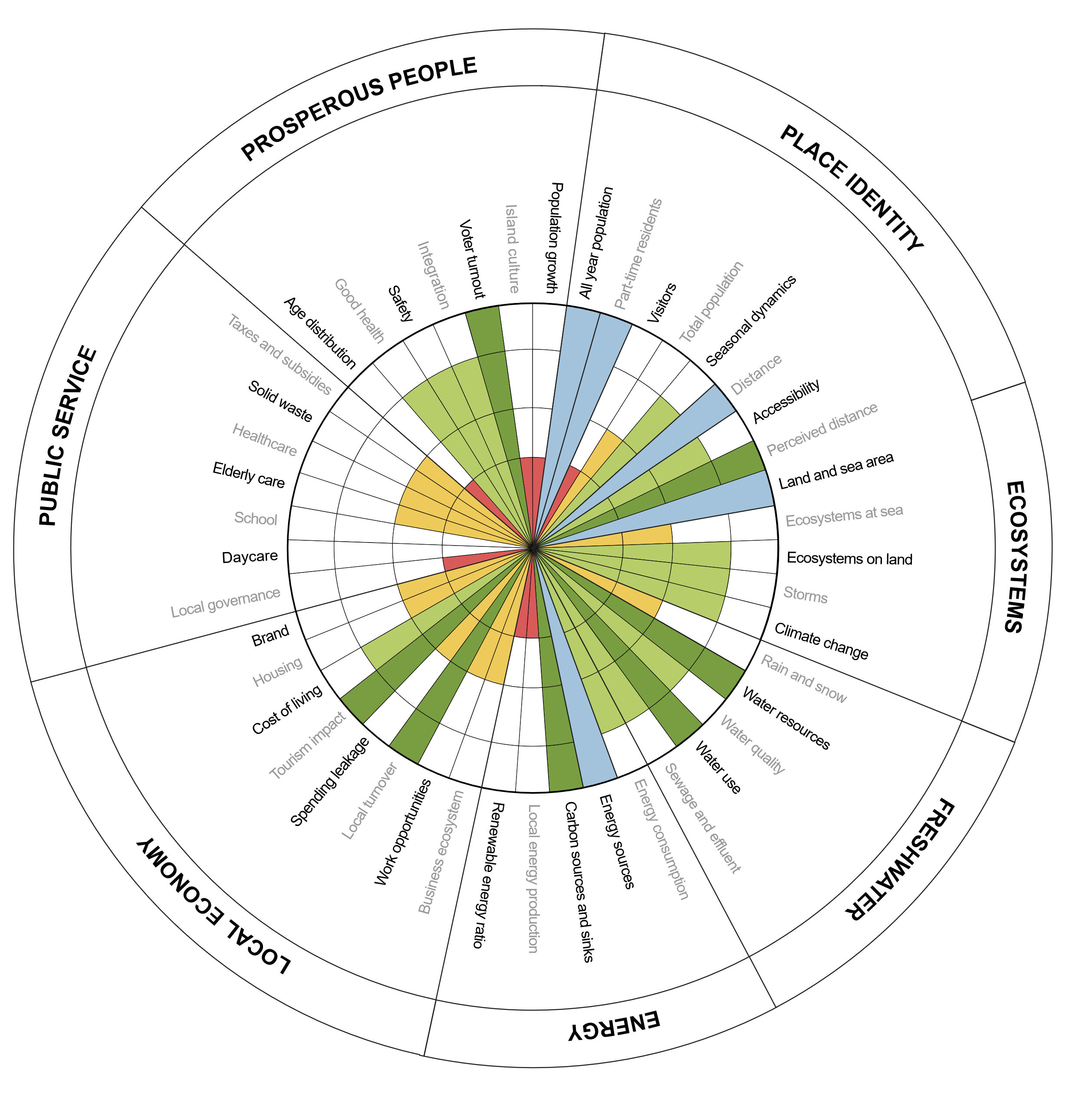
The Sibboo archipelago consists of two areas: the western and central parts of the archipelago with islands that lack fixed road connections, and the eastern part of the archipelago with the two islands Kitö and Löparö, which have bridge connections to the mainland. These two islands are the focus here. Seventy people are registered as permanent residents on the two islands, which together have an area of 8 km² of land and 10 km² of surrounding sea. There are also 211 holiday homes on the islands, and they receive just over 7,000 visitors per year.
The study
The study was carried out in 2023 by the Sibbo Archipelago Delegation with the support of the municipality’s experienced and dedicated special planners, working one day per week. Members of the delegation participated several times in seminars and meetings during March, April, and May, where the content of the habitability analysis was discussed.
In May, around 30 archipelago residents and summer guests participated in a community evening. One group worked on the archipelago’s ecosystem. At a meeting in June, the Archipelago Delegation preliminarily approved the habitability analysis for public consultation during the summer, although no feedback was received. In October, the results were presented to the municipal board.
All indicators have been measured and reported. The introduction and indicators 10–13 are shared between the two archipelago areas.
The outcome
The distance to the municipal centre Söderkulla is just under 20 kilometres. A bus runs six times per day but not on weekends. Accessibility is good (score 3).
Water, sewage, and energy pose no immediate concerns, but the share of fossil‑free and locally produced energy is very low (score 1). Most residents work on the mainland, the average income level is high, but only a small portion of the money stays on Löparö and Kitö. Health care, elder care, and other social services are located on the mainland and are considered accessible and of good quality.
The islanders feel well, but their numbers are decreasing and ageing. The population has declined by 20 percent (18 people) in ten years. Nine percent are aged 0–15, while 37 percent are over 65. This results in a dependency ratio of 84 — meaning one person in working life supports both themselves and nearly one additional person. Interestingly, this is almost the same as in the western and central Sipoo archipelago, even though the conditions in the archipelago areas differ significantly.
Sibbo’s full habitability report is available here (in Swedish).
After the study
Members of the Sibbo Archipelago Delegation, the municipality’s special planners, and a representative from Åbo Akademi presented the habitability analysis report in detail to the municipal board on 9 October 2023. The board discussed the matter, expressed its appreciation, and recorded the report for information.
Västanfjärd / Egentliga Finland
The island
Västanfjärd is the southwestern part of Kimitoön in Southwest Finland. Västanfjärd has 725 registered residents and covers an area of 149 km², of which one‑third is sea. Until 2009, Västanfjärd was an independent municipality.
The study
Västanfjärd’s habitability analysis was conducted in 2023 using five thematic groups, a survey answered by 204 people (both full‑time and part‑time residents), and discussions at the local Wednesday café. A project manager coordinated the work and compiled the results with support from the Västanfjärd Village Council and a support group. All indicators were assessed.
The project was financed by Leader – I samma båt, Konstsamfundet, and Svenska kulturfonden
The outcome
According to the habitability analysis, the human pressure on Västanfjärd is 1,110 people (compared to 725 people in the official statistics). The distance from Västanfjärd to Kimito centre is 15 minutes by car, and to Turku 45 minutes. There is no difference between the actual and perceived distances, since Västanfjärd is not an island in the strict sense, and Kimitoön, to which Västanfjärd belongs, has two bridges connecting it to the mainland.
Västanfjärd receives high ratings in six areas, with somewhat lower scores regarding the ecosystem. Two low values stand out in the analysis: age distribution and population growth.
Thirty‑five percent of Västanfjärd’s permanent residents are over 65 years old, while only 18 percent are aged fifteen or younger, which creates a high dependency burden for those aged 16–64. Half of the employed population works outside Västanfjärd.
Spending leakage is significant, meaning that a very large share of purchases and investments are made outside Västanfjärd, a natural consequence of short distances, high accessibility, and a commuting workforce.
A presentation (in Swedish) of Västanfjärd’s habitability analysis can be found here.
After the study
The results of the habitability analysis have been incorporated into the Västanfjärd Parish Plan 2023. Since the analysis concluded that Västanfjärd is a safe and secure place to live, with excellent public services and residents who are healthy and well, the proposals in the parish plan focus primarily on marketing Västanfjärd.
Västanfjärd Parish Plan 2023 (in Swedish).