

News


Small Sketches, Vast Worlds – Tove Jansson Treasures from Åbo Akademi University Library’s Collections Go Digital
How did Tove Jansson create her beloved Moomin books? Now, for the first time, you have the opportunity to explore Jansson’s writing process in digital format. The digital edition is the result of a collaboration between Åbo Akademi University Library, the rights holders of Tove Jansson’s work, and the Society of Swedish Literature in Finland (SLS).
The project, funded by SLS, began in 2025 and aims to digitize and gather Tove Jansson’s manuscripts on a single platform. The majority of the content in the digital edition consists of material that Tove Jansson herself donated to Åbo Akademi University Library (ÅAB) in 1991, primarily relating to the Moomin books.
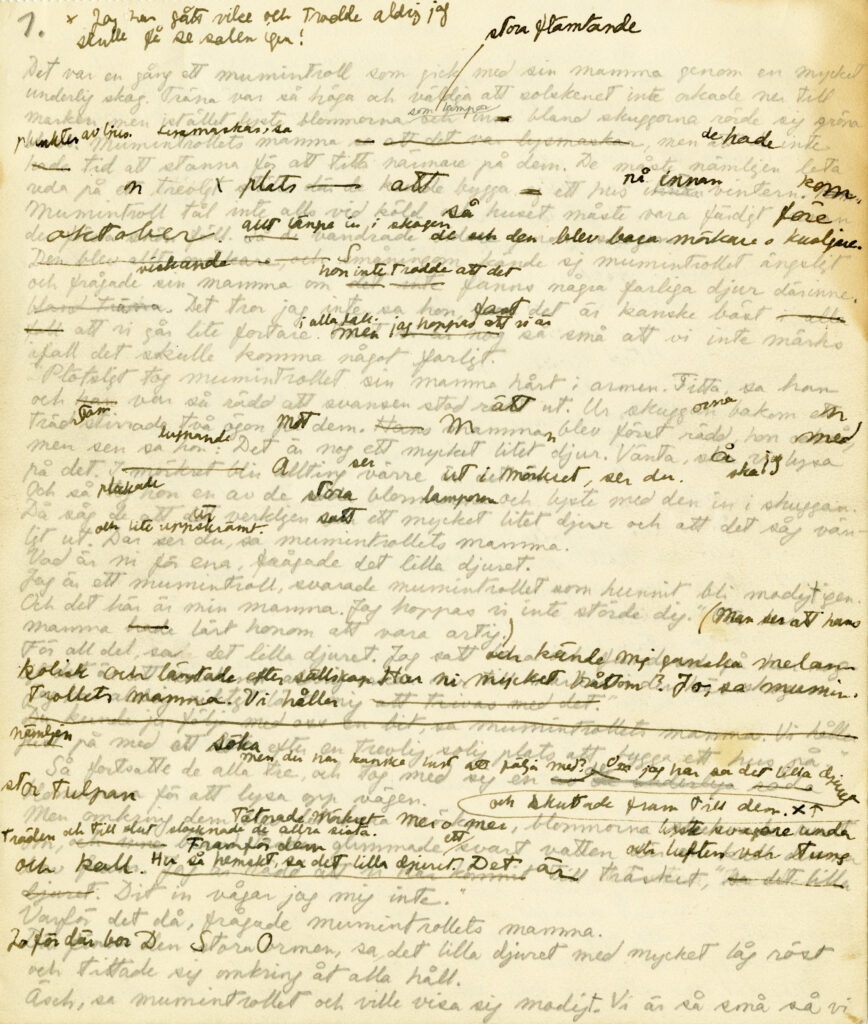
The collection consists of 18 archival volumes, spanning one and a half shelf metres and tens of thousands of pages. Almost all the material in the archive is handwritten, with the exception of a few typewritten publisher’s proofs that also contain Jansson’s handwritten notes and corrections. In the margins are small sketches and comments.
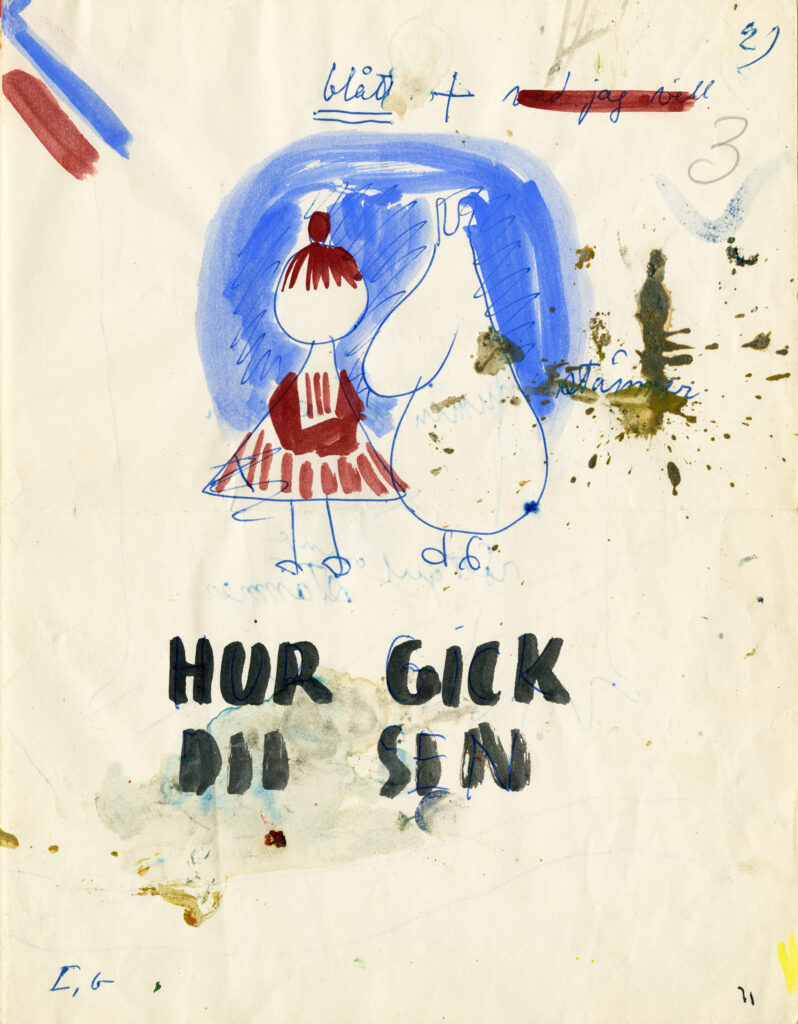
“In the printed manuscripts, you can see that she and the publisher had already come quite far in the editing process. Between the printed text she made small sketches in several places to indicate where illustrations would appear in the finished books, and on top of these, slips containing the final printed illustrations were later taped. It is wonderful to see her sketches; some consist of only a couple of pencil strokes, yet apparently everyone involved understood exactly what they depicted,” says Johanna Lindblom, archivist and project manager at Åbo Akademi University Library.
In total, five people at ÅAB were involved in scanning and creating digital copies of the archive’s physical materials. Only a few manuscripts had previously been scanned, but even those had to be redone because the quality did not meet the file requirements or standards for long-term digital preservation.
“It is quite a challenging task that requires great precision and attention to detail, while at the same time being monotonous and time-consuming. The starting point is that the files should be preserved for a very long time, and ideally, we should never need to scan this material again, so it is essential that the work is done properly from the very beginning.”
There are many factors that must be considered in the digitization process. Even though the actual scanning only takes a couple of seconds per page, a substantial amount of preparation and post-processing is required.
“Before you can even press the scan button, there are technical specifications that must be taken into account. The machine has to be calibrated, and afterwards the files, which in this case are quite large, need to be validated, corrected, and so on. We scanned approximately 50 pages per hour.”
Another important aspect is the correlation between the physical and digital material.
“A great deal of time was spent building this system. The files must be named correctly, and the digitized material has to refer back to the analogue material. It must be possible to locate the corresponding physical files based on the digital ones.”
One aspect that is lost in the creation of digital material is the perception of the physical object’s size, since the final files are all presented in the same format to make the reading experience as smooth as possible.
“It has been an incredibly educational project. The process itself — how to express and take into account what is lost when creating a digital copy of physical material, and how one has to think about metadata when trying to compensate for what is absent in the digital version so that it is useful for researchers working exclusively with the digital material. It has been a very rewarding collaboration with SLS, which has helped us develop our processes,” says Lindblom.
The digital edition allows readers, for the first time, to see all the small details that were part of Jansson’s creative process. The drawings and sketches in particular can be viewed in exceptionally high quality.
“The best thing about the project is that more people now have access to the material. She was truly extraordinarily talented. A tiny sketch in the margin can be absolutely remarkable. With just a few strokes of the pen, she managed to create an atmosphere, even if it is only a tiny figure in the corner of the paper. One personal favourite is an early predecessor to the picture book The Book About Moomin, Mymble and Little My (Hur gick det sen?), which Jansson made as a small booklet on graph paper, cutting out little holes similar to those in the finished book. It is fascinating to see how that idea developed.”
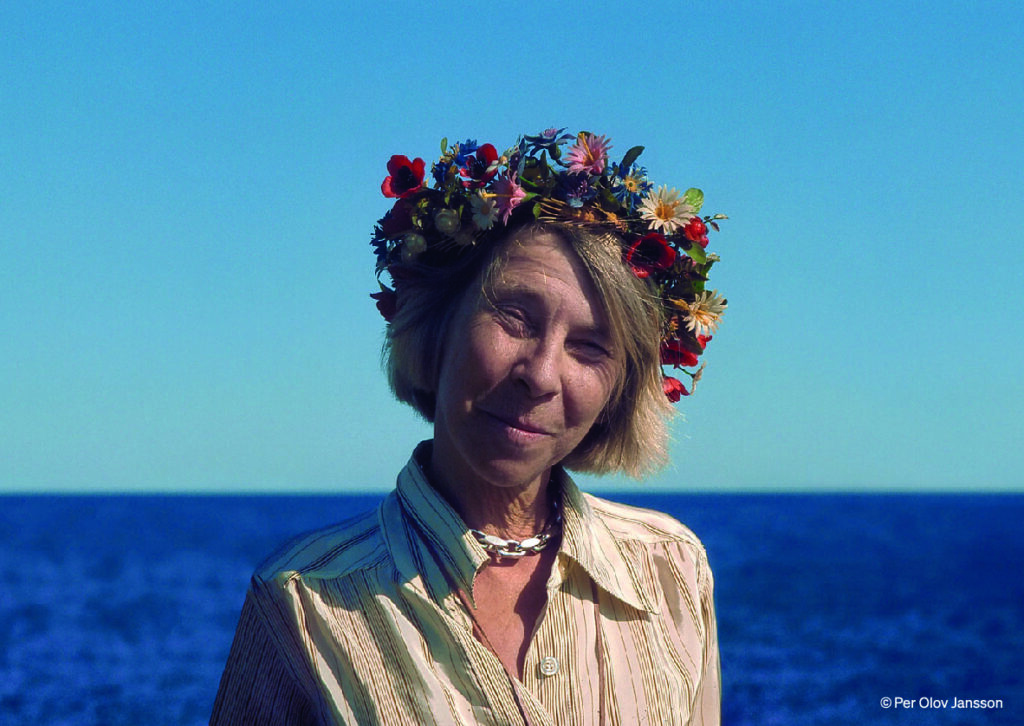
You can explore the digital edition of Tove Jansson’s writings here.
To access the digitized material, users need to register on the website. The material may be used for non-commercial purposes in private, educational, and academic contexts.

You might also be interested in
-

The Research Council of Finland grants over €3.5 million to research at Åbo Akademi University
The Research Council of Finland has awarded funding for new positions as Academy Research Fellows and for Academy Projects.

-
Chancellor Marianne Stenius appoints eleven new docents
“Docents bring valuable expertise to Åbo Akademi University by broadening and deepening knowledge within their fields. They contribute to both research and teaching, and many…
-
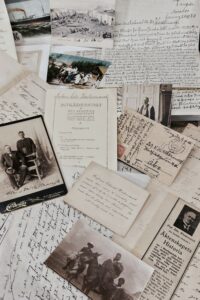
Edvard Westermarck’s Archives inscribed on the UNESCO Memory of the World Register, honouring his pioneering work in anthropology and sociology
The award is a significant international recognition of Edvard Westermarck’s historical and scientific efforts, his contribution to anthropology and sociology both in Finland and globally.…