


Seagrass ecology


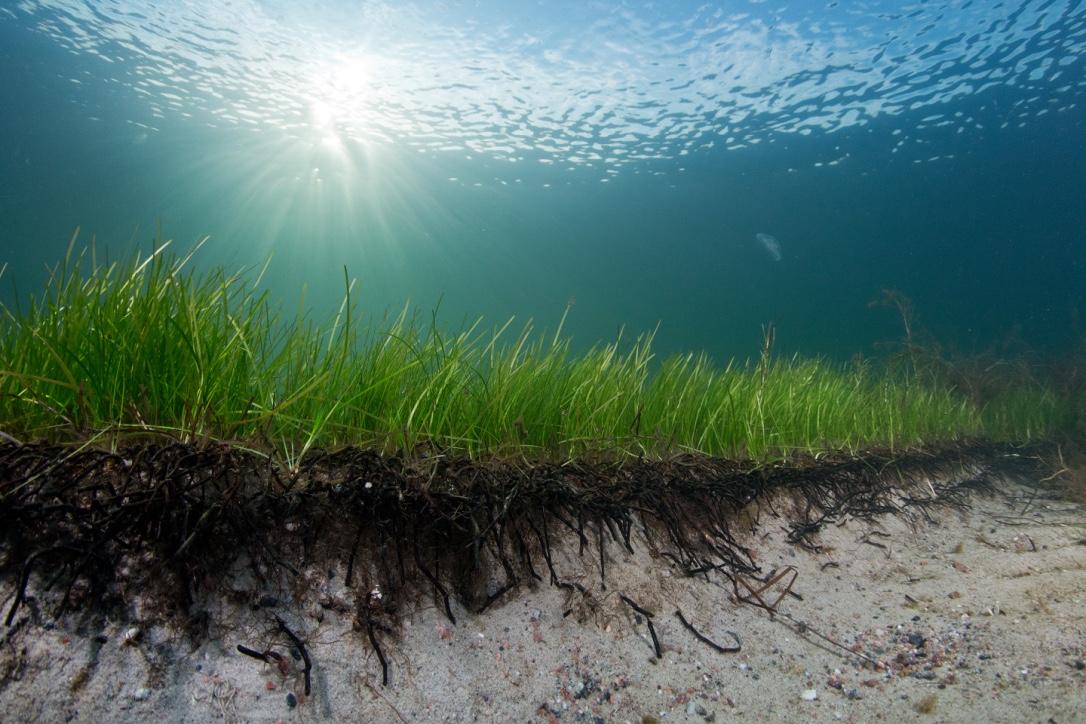
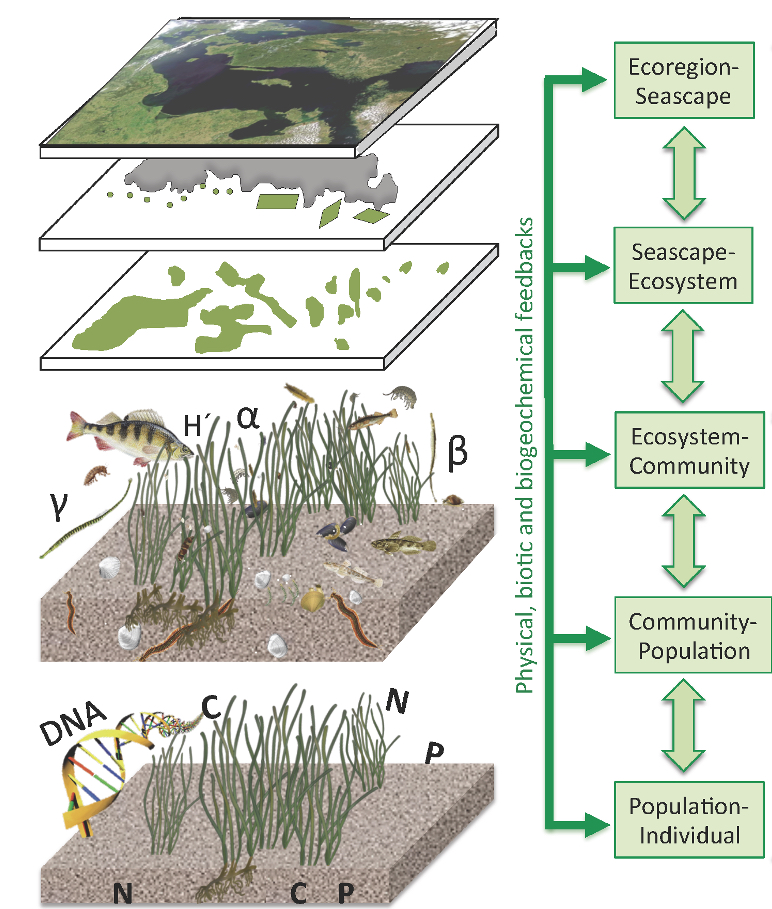
Seagrasses are marine angiosperms that form vast meadows on the seafloor. The only true seagrass in the Baltic Sea is eelgrass (Zostera marina). There is at least 2100 km2 of eelgrass in Scandinavia. Eelgrass meadows are both valuable and threathened. Reduced irradiance due to plankton blooms, drifting algae and human impacts are the major threats. Eelgrass supports multiple important ecosystem functions including nutrient, particle and carbon trapping, they function as wave bufferts and are important feeding grounds for fish. If we loose eelgrass we loose biodiversity and functions.
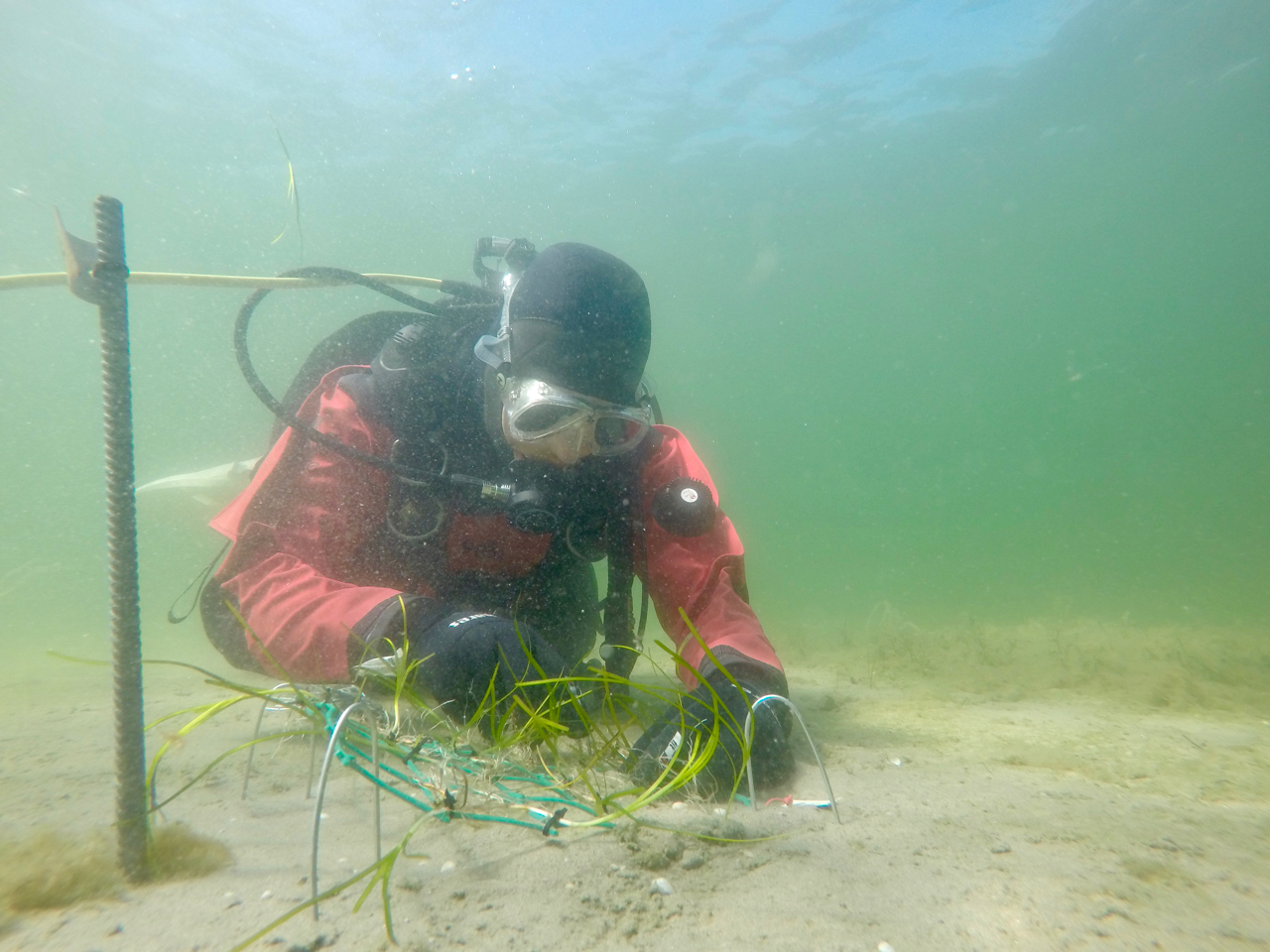
We are presently working with a broad range of topics within seagrass ecology, including their role as carbon sinks, the food web structure, and interactions between plants and hydrodynamics and sediment stabilization. Within the project NordSalt we are assessing the nature, diversity, extent and long-term changes of Nordic coastal marsh habitats, to evaluate their role in climate regulation and to assess their vulnerability and change in ecological structure and functions under future climate warming scenarios, local environmental pressures and management decisions.
Research group and collaborators:
Assoc. Prof. Christoffer Boström
Assoc Prof. Christian Pansch-Hattich
Doc. Mikael von Numers
FD Anu Vehmaa
PhD. Henri Jokinen
MSc. Betty Gubri
Projects:
| Period | Name |
| 2022-2023 | Blue Carbon in Shallow Bays (Åbo Akademi University, Stockholms University, Stockholm Resilience Centre) |
| 2022-2023 | LITORE: Luontokadon ilmenemismuodot Suomen rannikkoalueilla: Päätöksentekijän opas Itämeren vedenalaisen monimuotoisuuden suojeluun |
| 2021-2023 | NordSalt – Climate Change Impacts and Biodiversity Interactions in Nordic Salt Marshes (EU Biodiversa) |
| 2020-2022 | The Good, the Bad, & the Ugly: Carbon storage, eutrophication effects, and emergent health risks in the global marine sediment microbiome (PI Emmet Duffy) |
| 2021-2023 | Climate change effects on ecosystem functioning in marine communities: A trait-based approach, Helmholtz Institute for functional marine biodiversity (PI Lukas Meysick) |