


News


The Research Council of Finland funds cutting edge research at Åbo Akademi University with €4.5 million
Researchers at Åbo Akademi University have been granted nearly €4.5 million by the Research Council of Finland. The funding supports high-level research in fields such as cancer biology, everyday expressions of nationalism, and the environmental drivers of forest chemical ecology.
The Research Council of Finland has selected new Centres of Excellence for the 2026–2033 programme period. The selected Centres include a total of eleven research groups from thirteen universities and research institutes.
Researchers from Åbo Akademi University are represented in three of the newly selected Centres of Excellence, and have been awarded substantial funding: nearly €4.5 million.
A Centre of Excellence is a research community that is striving for, or is already at, the international cutting edge of its field.
The aim of the Centres of Excellence Programme is to elevate the quality of Finnish research, support scientific renewal, and increase the societal impact of research. Groups selected for the programme demonstrate strong capacity for innovation, maintain a high scientific standard, and have the potential to make a significant societal contribution, according to the Research Council of Finland.
Chemical communication in forests
Tan Phat Huynh, Associate Professor of Chemistry, is one of the researchers at Åbo Akademi University receiving funding. He is partner in a research consortium coordinated by the University of Eastern Finland.
Within the ACE-Forest (Anthropocenic Chemical Ecology of Forests) project, researchers study how chemical interactions in forests change across time and space during the Anthropocene – the era dominated by human impact on the environment.
“In the project, we will elucidate the ecology of plant and insect responses to chemical cues from root to the apex of mature trees, resolving scales from localized chemical signalling to ecosystem fluxes of secondary organic aerosols. The project will make fundamental advances in understanding environmental impacts on chemical ecology at the ecosystem level,” Tan Phat Huynh explains.
Nationalism in everyday life
Ann-Catrin Östman, Senior University Lecturer in History at Åbo Akademi University, also receives funding. She is a partner in a research project coordinated by the Finnish Literature Society.
Within the NARS (Nationalism Research Studies in the Humanities) Centre of Excellence, researchers focus particularly on how nationalism manifests in people’s everyday lives, how it shapes new communities and exclusions, and how people themselves are creative participants in constructing the nation and utilising it for their own purposes.
Östman and the other researchers at Åbo Akademi University involved in the project focus especially on minority nationalism. ÅAU-affiliated scholars – including Hanna Lindberg – examine the interplay between majority and minority nationalism.
“Nationalism is an acutely relevant theme today in many contexts. Different forms of nationalism are once again on the rise. Why is that? Within our humanities-focused Centre of Excellence, we aim to answer that question by studying people’s everyday experiences and practices. From historical perspectives, we also explore the significance of emotions and memory”, says Ann-Catrin Östman.
Immune cell interactions with the lymphatic system
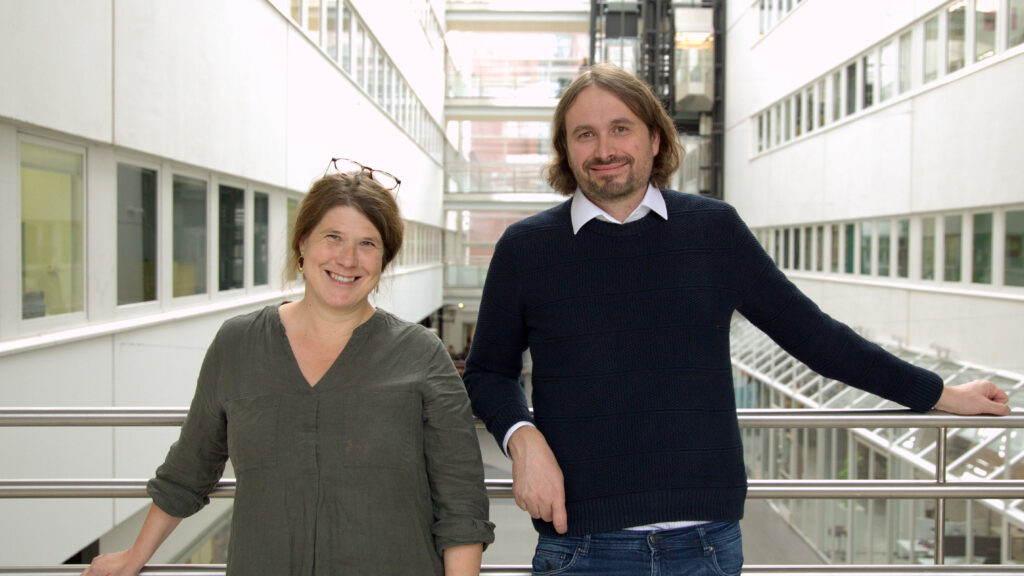
Guillaume Jacquemet, Associate Professor of Cell Biology at Åbo Akademi University, and Cecilia Sahlgren, Professor of Cell Biology at Åbo Akademi University, receive research funding for the IMMENs project, conducted in collaboration with the University of Helsinki.
The project explores how immune cells (leukocytes) interact with specialized cells in the lymphatic system, known as lymphatic endothelial cells (LECs), to regulate localized immune responses. The researchers aim to understand how these interactions function in both healthy and diseased states, and how tumors manipulate them to evade immune detection.
“The insights generated by this project could pave the way for new strategies to harness the immune system and enable more effective therapies,” says Guillaume Jacquemet.

You might also be interested in
-
Global Collaboration for Sustainable Oceans
“Even if you live thousands of kilometres from the coast, the condition of the oceans affects you through weather patterns, food supply, and essential ecosystem…

-
Åbo Akademi University and Mirka Strengthen Collaboration
Åbo Akademi University and Mirka have entered into a strategic partnership agreement to enhance and further develop their collaboration in research, education, and sustainable development.…
-
Michael Cochez appointed new Professor of Artificial Intelligence at Åbo Akademi University
Dr. Michael Cochez has been appointed PS Fellow and Professor of Artificial Intelligence at Åbo Akademi University. Cochez is an internationally recognized researcher in machine…