

News


Interdisciplinary marine research united over 100 participants at the SOS Annual Meeting 2026
Conversations about biodiversity loss, coastal fisheries, ecosystem restoration and sustainability filled the halls of Åbo Akademi University on 6-7 October, as more than 100 researchers, policymakers, students, business representatives and civil society actors gathered for the 2026 Annual Meeting of the Centre for Sustainable Ocean Science (SOS). While most participants joined in person in Turku, others followed the programme via livestream, creating discussions that crossed disciplines, sectors and organisational boundaries.
SOS Director and Professor in Marine Ecology Anna Törnroos-Remes opened the meeting by highlighting the Centre’s role in responding to rapid environmental change:
“Our role is not only to understand biodiversity change, but to help society navigate it.”
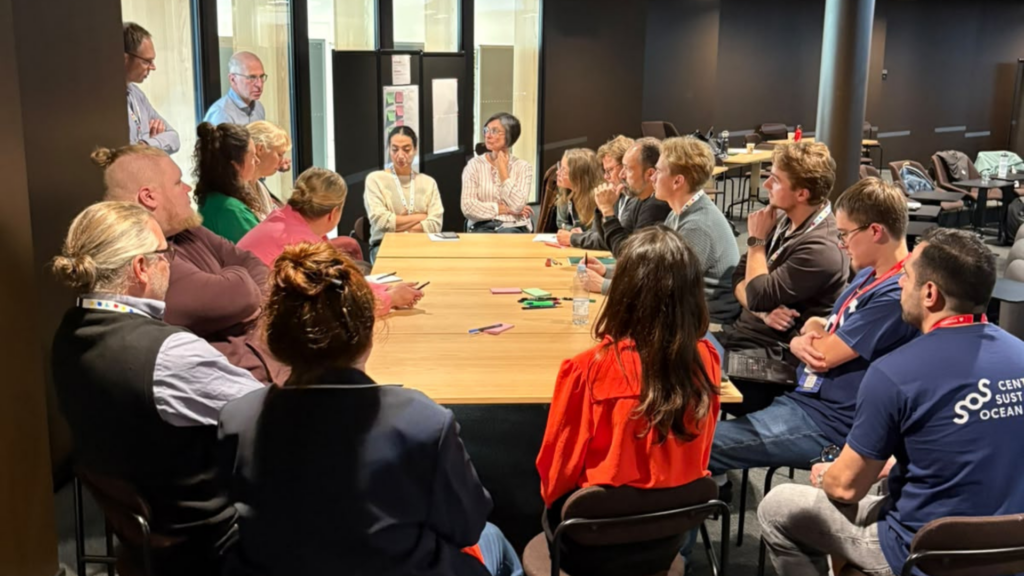
The two-day program showcased the breadth of ongoing research within SOS and highlighted the importance of collaboration in addressing some of the most pressing challenges facing marine and coastal environments.
Over the course of two days, participants explored themes ranging from ecosystem restoration and biodiversity conservation to fisheries, governance, sustainability leadership and innovative forms of art-science collaboration. Research presentations demonstrated how interdisciplinary approaches can generate new insights into the future of the Baltic Sea and the Archipelago Sea.
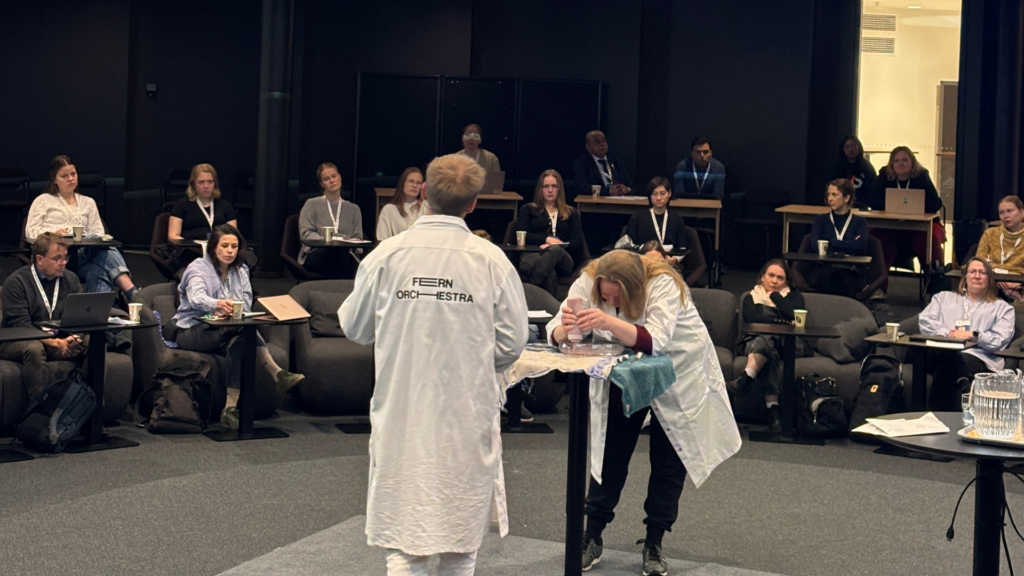
The programme also encouraged dialogue between science and society. In her keynote address, Kirsi-Marja Lonkila from the Ministry of the Environment examined the role of science-policy dialogue in biodiversity policy, drawing on experiences from both national policymaking and international biodiversity processes. Lonkila called for closer communication between scientists and civil servants:
“Civil servants are experts in their field, who want their work to be based on the strongest possible evidence base. However, they are generally not overwhelmed by contacts from the research community”.
Lonkila also stressed that biodiversity loss is driven by underlying systemic causes, and that lasting solutions require addressing the root causes embedded in economic, social, institutional and cultural systems, rather than only treating symptoms.
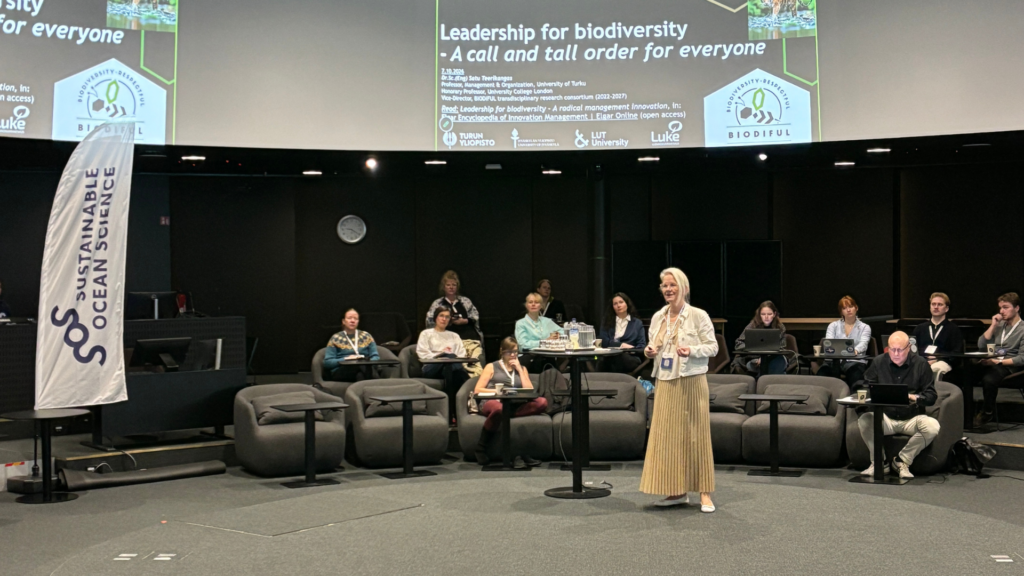
Another central theme of the event was the need for action and leadership in the face of accelerating biodiversity loss. In her keynote presentation, Satu Teerikangas, Professor of Management and Organization at the University of Turku, challenged participants to consider how organizations and individuals alike can contribute to transformative change for biodiversity and sustainability.
Teerikangas argued that contemporary civilization is trapped in a vicious cycle with over-consumption, a growing global population, inequalities and biodiversity loss, and we need a paradigm shift where we challenge our self-perception and our view of a “good life.” Teerikangas called for a transition from the current prevailing view of humans as “homo economicus” – ego-centred, rational thinkers that see nature as merely a resource – to “homo ‘sapiens’” – holistic thinkers who prioritize shared benefits and care for all beings, and act within planetary boundaries.
SOS Vice Director and Professor of Environmental Governance and Policy Nina Tynkkynen raised three key impacts that SOS strives for moving forward in her closing words that concluded the annual meeting.
‘’Firstly, we must facilitate the shift from conflict to balance between economic, societal, and biodiversity interests, and help alter the “if one wins then one loses” mindset that often prevails. Second, we need to move from merely preventing biodiversity loss to active biodiversity stewardship. Third, from fragmented knowledge, we should build towards shared understanding. And for this, we need to include all types of knowledge’’, Tynkkynen said.
As SOS moves into the second half of its Centre of Excellence term, one message stood out clearly: tackling biodiversity loss requires shared understanding, collaboration across sectors and a willingness to turn knowledge into action. The annual meeting showed that this work is already well underway.
Read more about the Centre for Sustainable Ocean Science (SOS ) here.
