



Aktuellt


For a more inclusive society, we must start by helping teachers in the classroom – Emmanuel Acquah works for equal education for all
All students should have the right to the same materials at school: touchpads, teaching materials and other tools. But true equity in school is more than just equal equipment. It is about ensuring that every pupil also has the ability (know-how) to use the materials. Creating inclusive and fair education for all, regardless of background, is the focus of Emmanuel Acquah’s research.
He wasn’t actually supposed to become a teacher; he was going to study medicine at one of the top schools in Ghana. And his doctoral thesis several years later wasn’t supposed to be about inclusive education at all; it was going to be about bullying. But sometimes it’s as if fate has other plans, and that’s exactly what happened to Emmanuel Acquah.
– It was my professor who made me realise that my own experience is what I should base my research on. Why don’t teachers understand me and my way of learning, how should I behave, why do things happen in a certain order that I’m not used to, and how can I deal with the stress that these kinds of feelings cause? Cultural differences are extremely important to understand and take into account, and this is an area where there is a lot of work to be done within the Finnish education system, says Acquah.
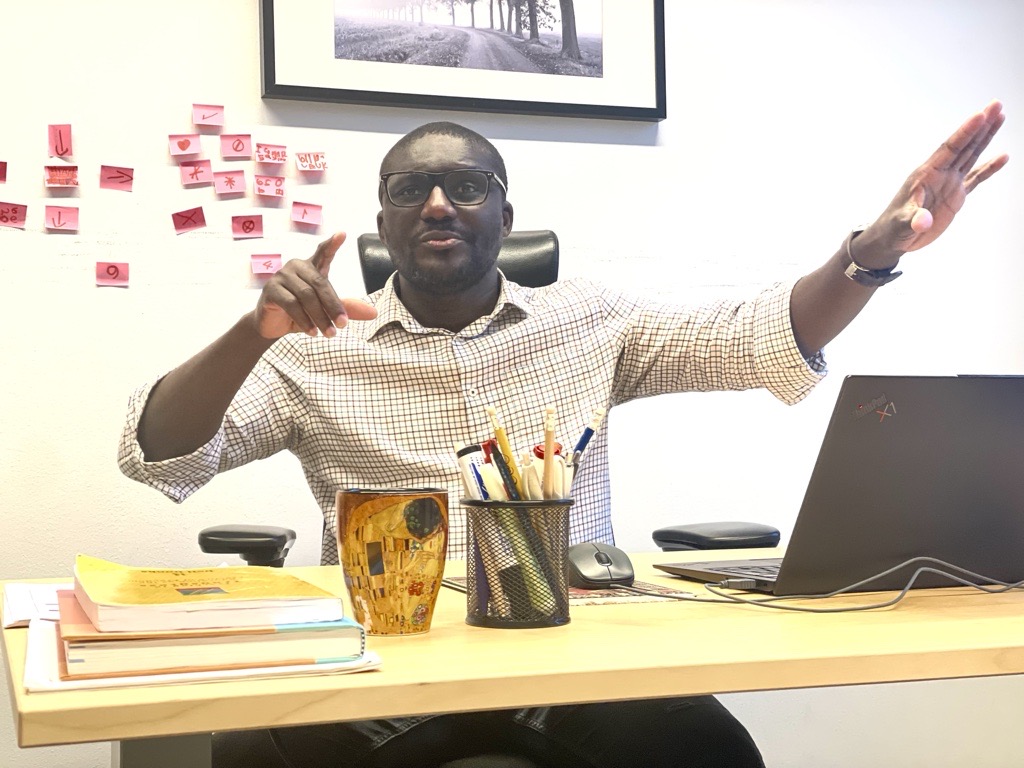
At the end of October 2025, he will be inaugurated as professor of education with a focus on minority studies at Åbo Akademi University. For several years, his work has focused on making education in Finland accessible and inclusive for students with a foreign background in various ways and at various levels.
It is about the way we have learned to learn.
– The view of what knowledge is differs between cultures: is it being able to reproduce as accurately as possible what the teacher said during the lecture, or is it coming up with your own solutions? The fact that our teachers are not equipped to see such differences contributes to the gap between native Finns and immigrants in Finland. It is not a question of personality or intelligence, but rather a structural issue. It is about the way we have learned to learn.
The importance of classroom work
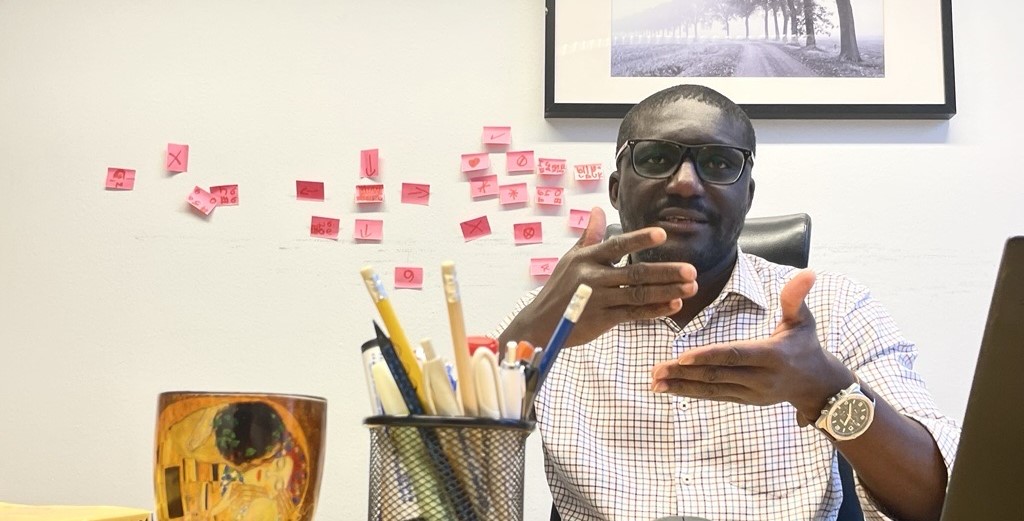
In Acquah’s office at Academill in Vaasa, the wall is covered with pink Post-it notes, there are a few decorative items on a shelf. Acquah sits at his desk, gesturing as he talks. His way of explaining things through examples shows that he has both the experience and the academic expertise when he says that teachers are an extremely important piece of the puzzle when it comes to improving the integration of immigrants in Finland.
– Teachers are in a very challenging position. Classrooms can contain students with extremely varied levels of education – from illiterate to university-educated. Such differences make it difficult to differentiate teaching.
He explains that there still is a lack of courses on how to work with students from different backgrounds in teacher training programmes. As a result, teachers are unprepared and have to learn by trial and error. He and his colleagues were able to demonstrate this, among other things, in a study from 2023, in which they mapped the difficulties that teachers in Swedish-speaking Finland encounter when teaching adult students with a foreign background.
Teachers are in a key position
– One of the main questions is: how can we support teachers? Some of the problems today stem from the way the education system for integration is designed, for example, the fact that the materials teachers have are often Swedish, not Finland-Swedish. This means that teachers are forced to come up with and create their own materials; they have to find ways to explain cultural references, for example. Today’s teacher training does not prepare teachers for teaching heterogeneous, multilingual groups.
Another shortcoming in the system is that current digital resources are mainly aimed at children and do not work well for adult learners.
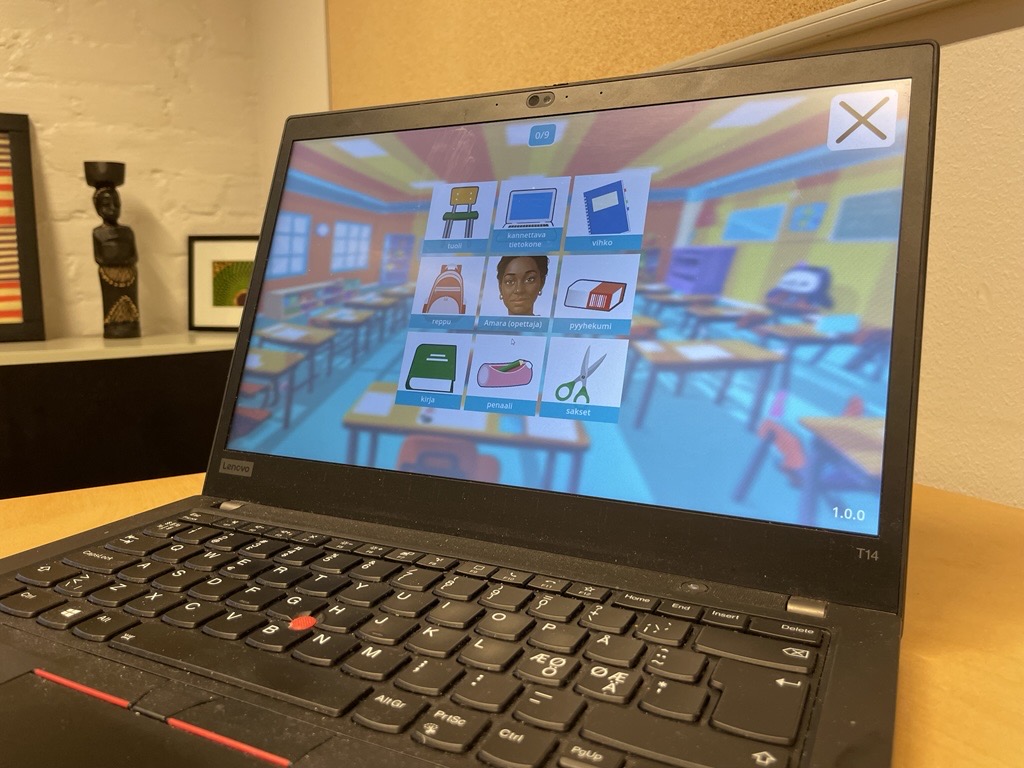
Acquah turns the screen of his laptop and shows some pictures of a game. We will come back to that in a moment.
– The authorities have a poor understanding of the reality in the classroom. While teachers see integration as an educational process, the authorities regard it as an administrative procedure with standardised timetables. Unrealistic expectations mean that, in the long run, the country may lose out on smart, competent people.
Wanting to create a missing theory
According to Acquah, it is a major problem that immigrants today are mainly seen as liabilities (cost items), not as assets. Many immigrants are involved in voluntary activities such as sports and associations, for example, and make a significant contribution to society in this way.
– There is no theory about this. I want to develop one, one that can create a discourse on things that are not highlighted today.
Integration is about involving individuals in society and providing them with the knowledge and skills required in society and working life, while at the same time giving them support so that they can preserve their culture and language. This also requires the right tools, such as the game Acquah showed pictures of.
He picks up the phone and calls a colleague.
– Are you in the building? Would you have the time to come show the game?
The game that can help both teachers and students
Over the past six years, Acquah has been working with colleagues at Åbo Akademi University and Novia University of Applied Sciences to develop a game called SPROK. The game can be played by students of all ages, but its main target group is school-age children. The game also has a teacher view that allows teachers to follow their students’ progress.
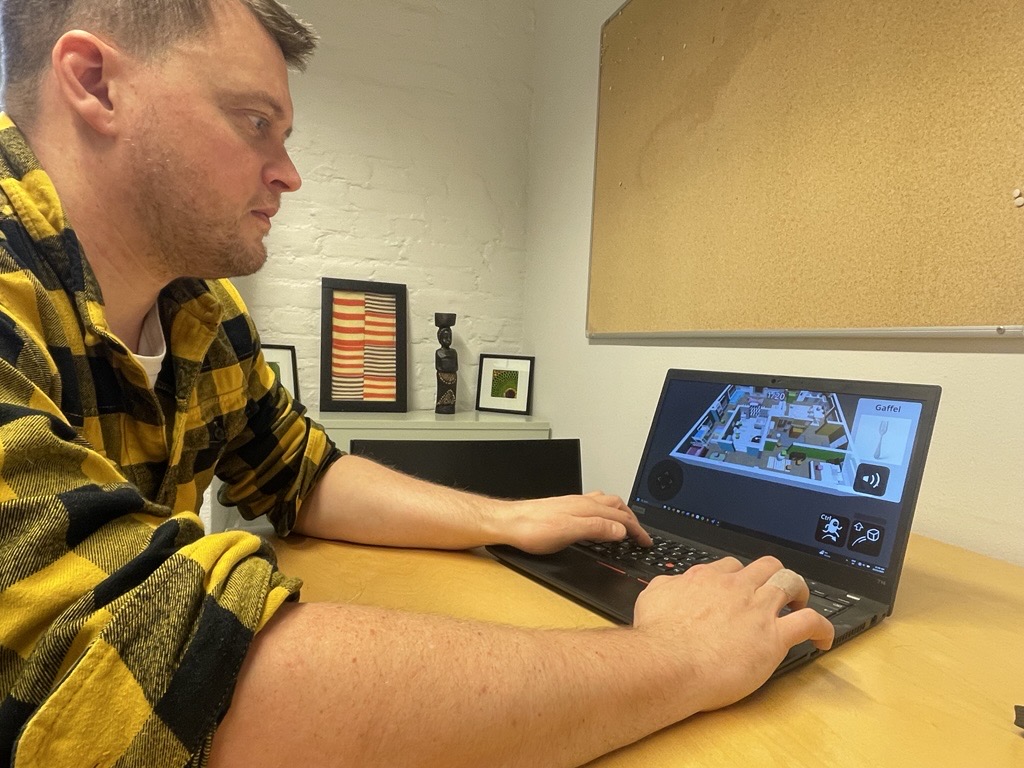
In the game, you see a surface, such as a home or a classroom. Depending on the level , you may be asked to name pieces of furniture or put things in the right place. It all depends on how well you know the language.
What distinguishes this game from other language games already available?
– Because it is monolingual, players can learn a new language without using any other language as an aid. We have looked at how we learn and remember languages and built up a contextual background with different levels of difficulty. This game can help both students and teachers. Now we hope that the game will move forward and develop into a product that schools can use.
