


Aktuellt


From simulation to sea: students test autonomous vessel on Åland
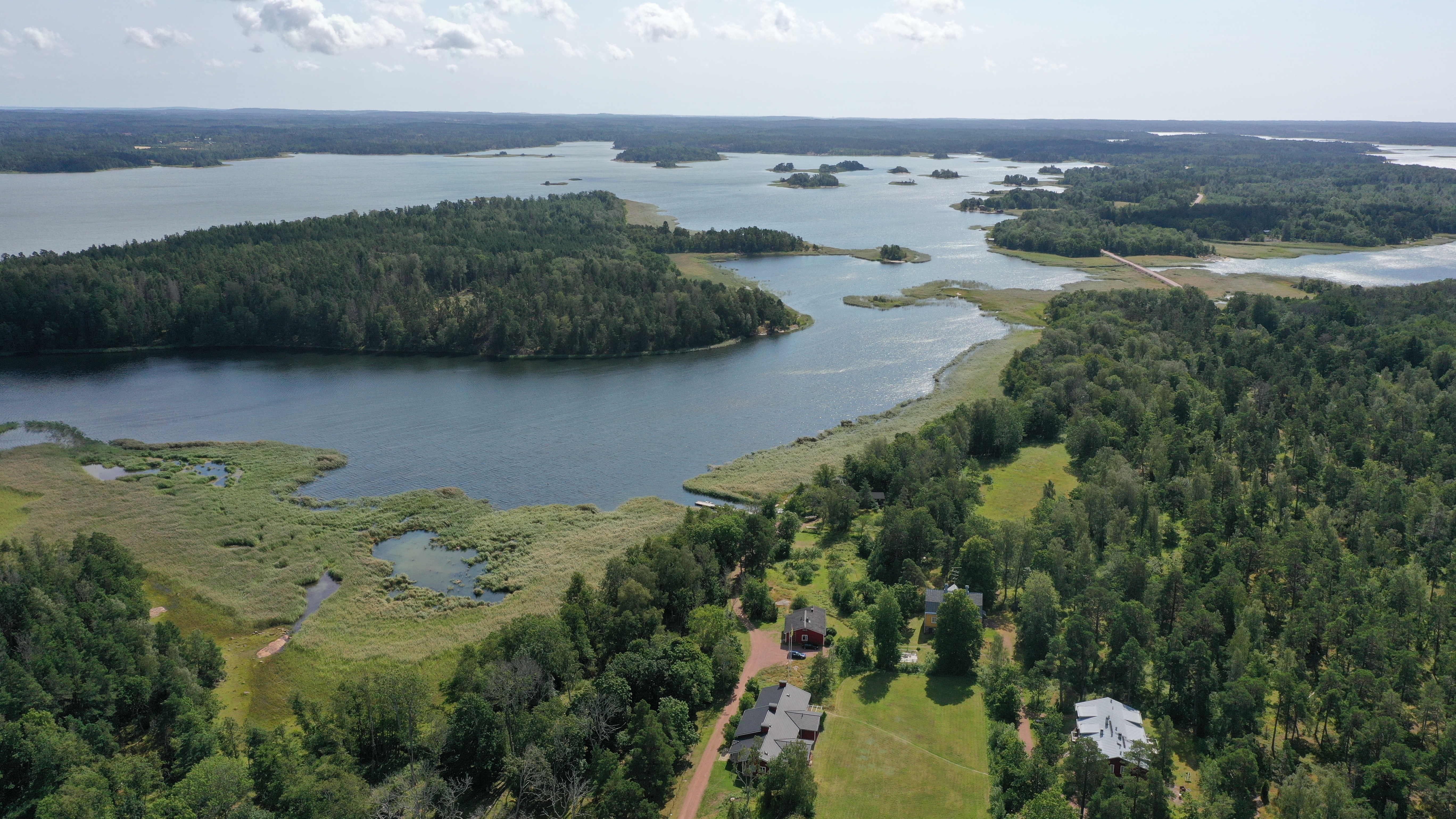
Autonomous vessels could one day help researchers monitor water quality, track pollution, and collect environmental data across the archipelago with minimal human intervention. To bring that vision closer to reality, master’s students Franck Martine and Simon Lagorce travelled to Åbo Akademi University’s biological research station in Husö, Åland, where they tested autonomous navigation technologies developed for the Åboat research platform.
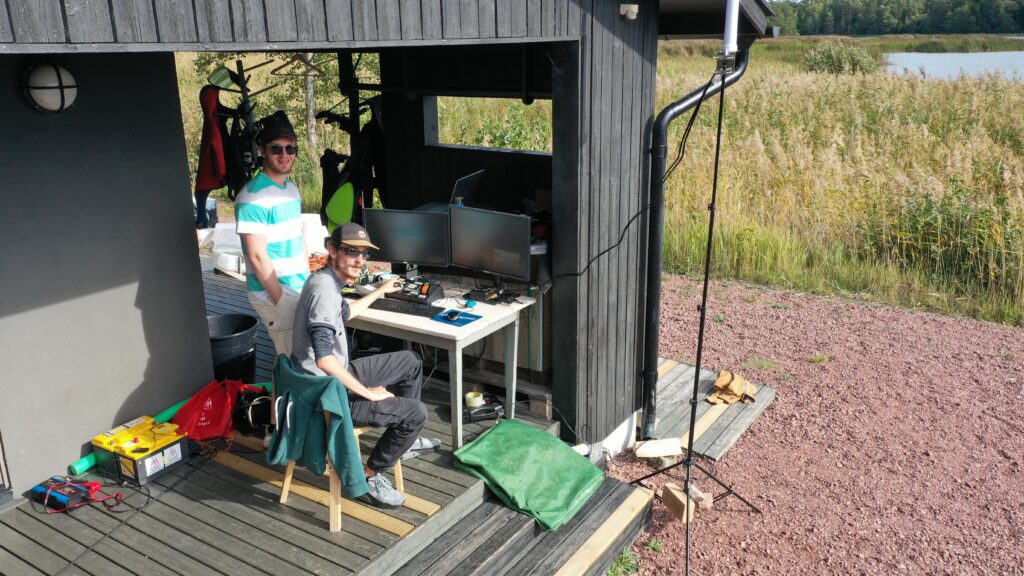
After months of developing software that enables a vessel to navigate on its own, Franck Martine and Simon Lagorce packed the Åboat research vessel into a car and headed for the Åland archipelago together with Professor in Software Engineering Sébastien Lafond.
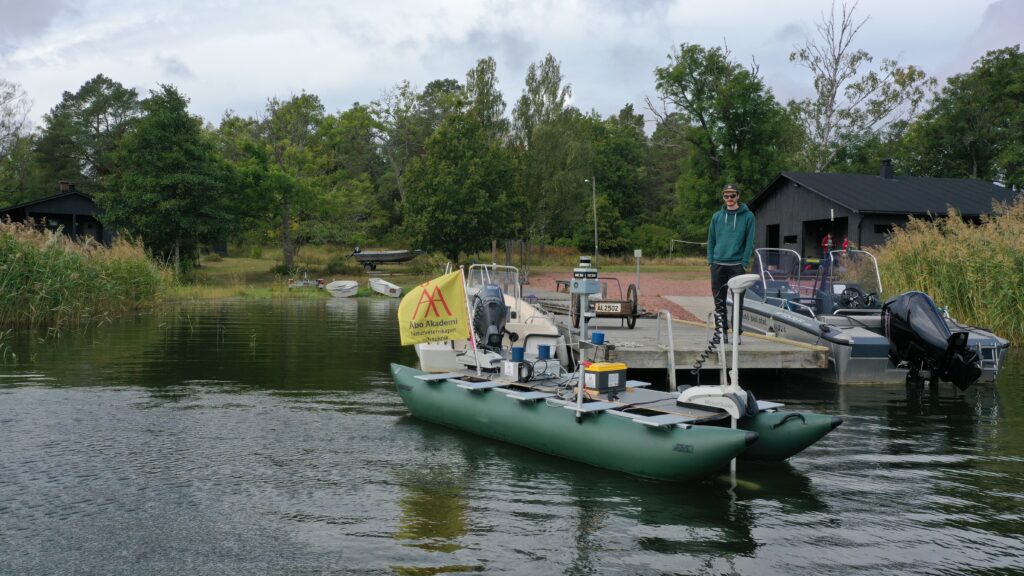
During a 10 stay in Husö, the team conducted field tests of autonomous navigation technologies developed for the Åboat research platform. The objective was simple but ambitious: to determine how well the vessel could navigate and react to its surroundings without human intervention.
“It is one thing to see algorithms working in simulation, and a complete other to place the vessel in a real maritime environment where weather, waves and unexpected obstacles become part of the equation,” says Professor Lafond.
The team tested an autopilot and collision-avoidance system that uses LiDAR-based perception, allowing the vessel to “see” objects in the water, such as boats, rocks or other obstacles, and adjust its route as needed. The students successfully implemented and tested several navigation algorithm parameters.
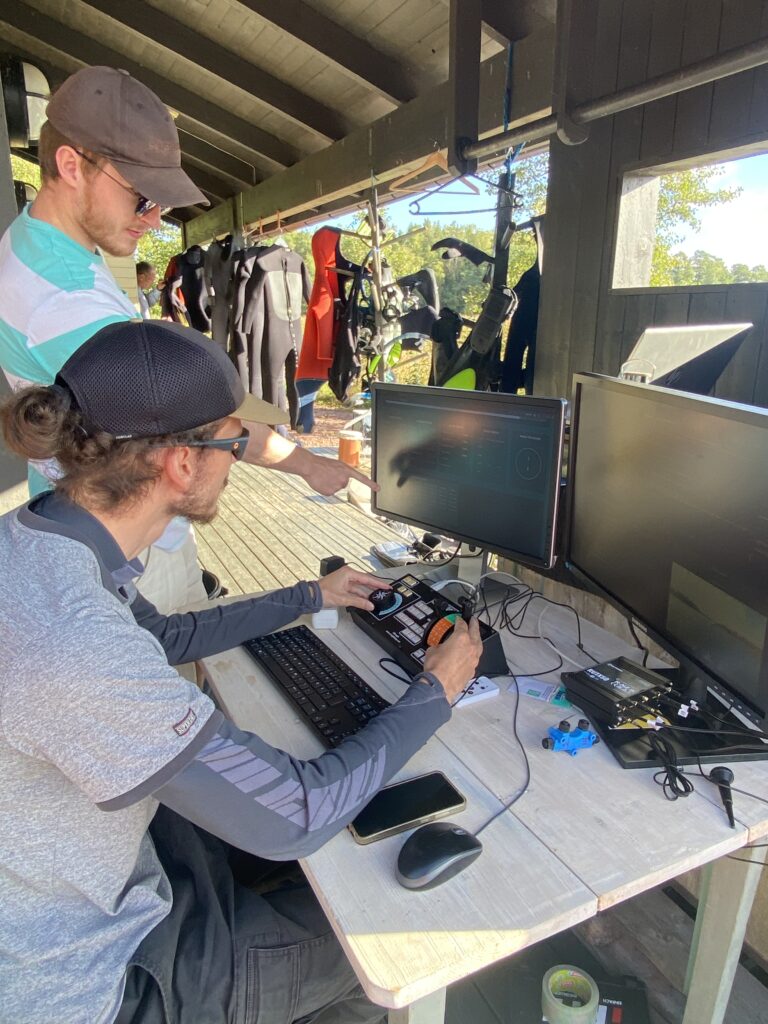
This work forms part of the master’s thesis projects of Franck Martine, Simon Lagorce, Léo Robert and Emma Guiguemdé, double-degree students at Åbo Akademi University from ESIGELEC and INSA Rennes in France. Their research combines robotics, autonomous systems, sensor-based perception, and maritime engineering to advance the capabilities of the Åboat platform.
Beyond advancing research into autonomous maritime navigation, the location itself highlights a unique aspect of the project. The testing took place in a marine research environment, showing how cross-disciplinary collaboration can create new opportunities for both engineering and environmental science.
Autonomous vessels such as Åboat could, in the future, support marine research by carrying sensors, collecting environmental data, and performing monitoring tasks with minimal human intervention.
‘’Åboat can be utilised to automatically monitor environmental parameters, for example, detecting and determining the geographical origin of pollution in the archipelago. We have already trialed the platform to measure a range of water quality parameters.” says Christian Pansch-Hattich, Professor of Marine Ecology .
About Åboat
- Åboat is a research vessel developed by the subject of Information Technology at Åbo Akademi University. The platform serves as a testbed for research on maritime automation, autonomous navigation, and intelligent software systems.
- The long-term goal of the project is to develop Åboat into a fully autonomous vessel capable of carrying out monitoring and search operations on water.
- Over the years, Åboat has provided the basis for numerous master’s thesis projects, student internships and research initiatives in software engineering, robotics and autonomous systems.
- The platform allows researchers and students to test technologies such as autonomous navigation, collision avoidance, sensor fusion, situational awareness, and digital twins in real-world conditions.
- Åboat is equipped with a range of sensors, including cameras, LiDAR, GPS and other navigation instruments that enable it to collect data and operate in complex maritime environments.
- In collaboration with researchers in Environmental and Marine Biology, Åboat has been used to collect environmental data, including temperature, salinity, dissolved oxygen, pH and turbidity, demonstrating how autonomous technologies can support future marine research.
