


News


Five questions for Wander Perez Sena on his work with developing greener ways of manufacturing plastics
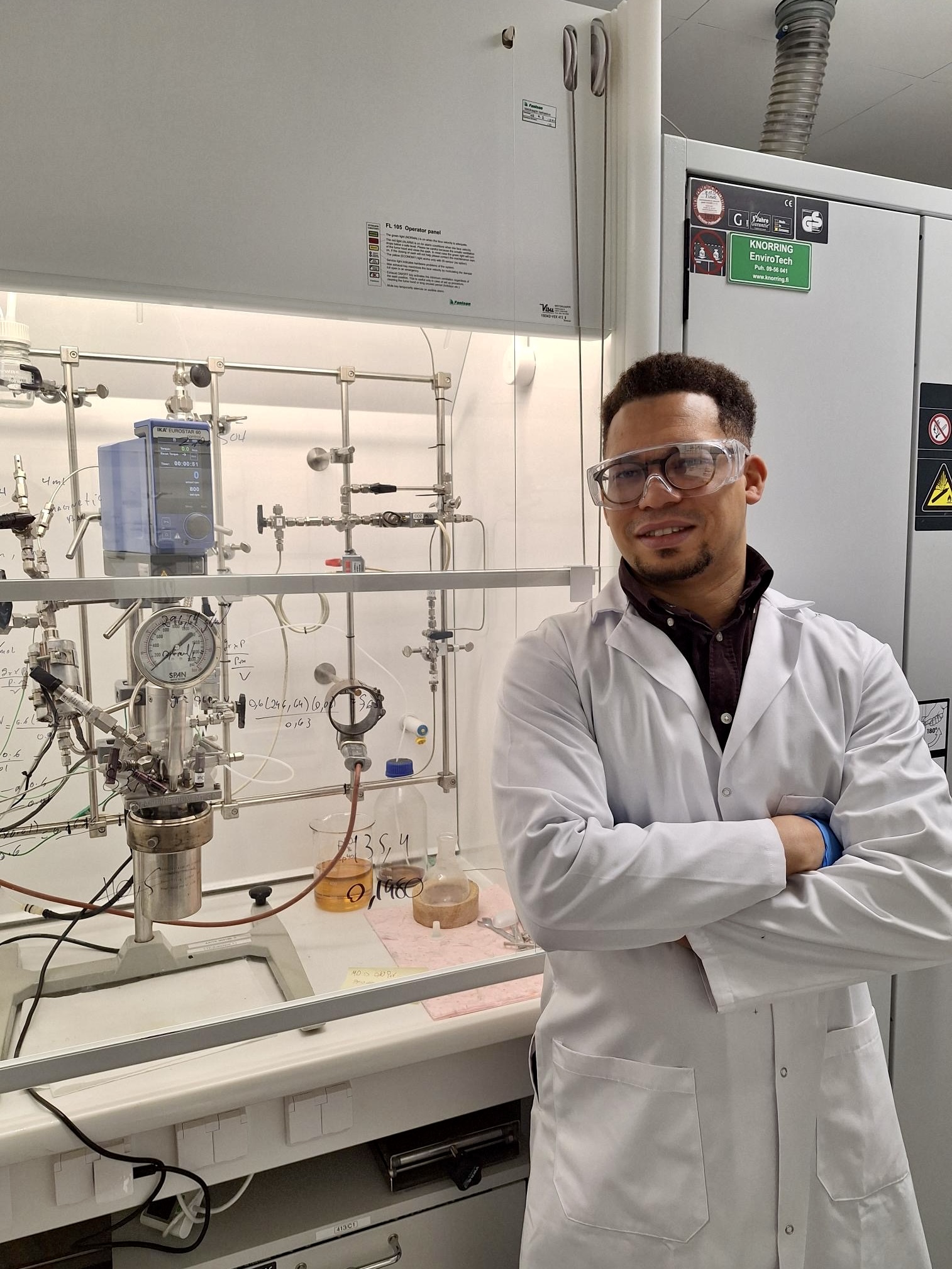
Polyurethanes are a form of plastic used in, for example, mattresses and coatings. Meet Wander Yamil Perez Sena, an Academy Research Fellow working on developing and testing catalysts that can be used in greener and more profitable manufacturing processes.
Who are you, and what sparked your interest in this field?
I was born in Santo Domingo in the Dominican Republic. As a child I was curious about every kind of science: physics, chemistry, biology. Initially I wanted to become a biologist. However, back then, I couldn’t picture a future outside my own country, and biology offered very few stable jobs at home. So, I chose chemical engineering instead. I had always liked chemistry, was decently good at mathematics and problem-solving and chemical engineers were in demand in the Dominican Republic.
After my bachelor’s degree I worked for more than a year in a pharmaceutical company. It was a valuable experience, but it also showed me that this wasn’t the path I wanted. Then I came across a master’s program in Energy, Fluids and Environment at INSA Rouen in France. I applied, packed my bags and left the country, something I had never imagined doing.
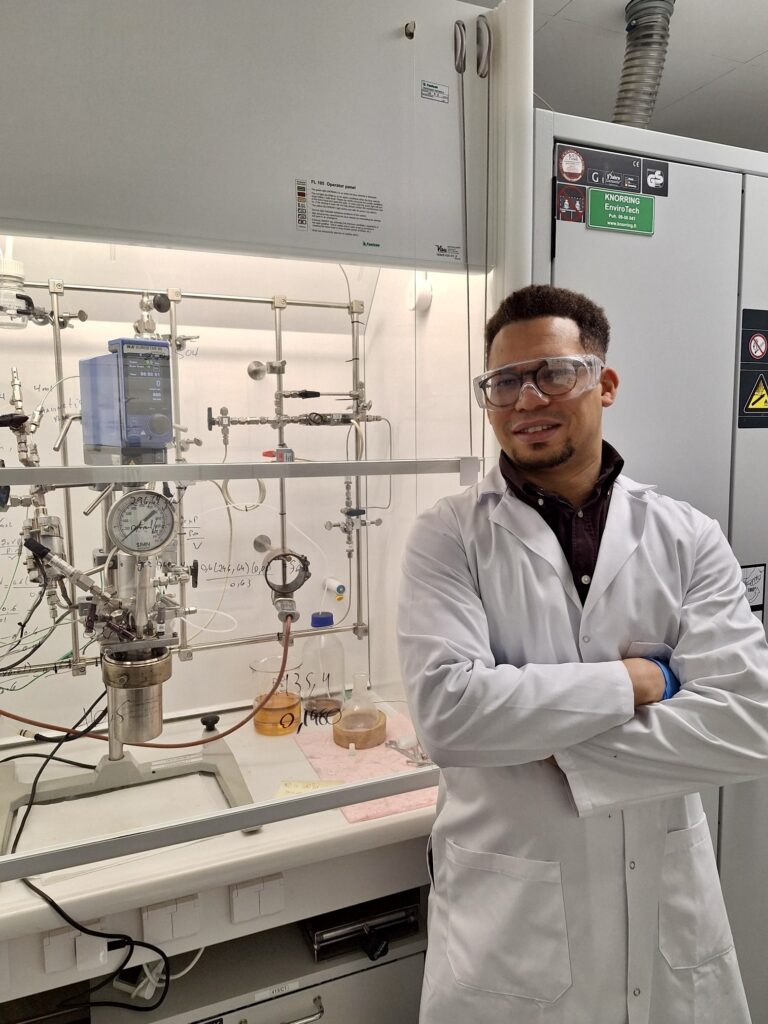
I stayed in Rouen for about three years. During that time, I met Professor Tapio Salmi from Åbo Akademi University, who later became one of my PhD supervisors, and my doctorate became a joint degree between INSA Rouen and Åbo Akademi. After my PhD I stayed in Turku as a postdoctoral researcher in the Laboratory of Industrial Chemistry and Reaction Engineering, working on products made from hemicellulose. Professor Salmi encouraged me to apply for a fellowship, and in 2025 the Research Council of Finland awarded me an Academy Research Fellowship.
What is the most unexpected discovery you have made in your research, and why did it turn out to be significant?
Cyclic carbonates have great potential as raw materials for greener plastics, but they are still hard to find on the market, and nobody yet produces them efficiently from renewable sources on a larger scale. That is the gap my project tries to close.
We make them from two ingredients: carbon dioxide and renewable raw materials. The renewable part comes from plant-based sources such as vegetable oils and terpenes, natural compounds found in plants and trees. Finland has plenty of them in the side streams of its forest industry.
We first convert these raw materials into reactive molecules called epoxides and then combine them with CO₂ using solid catalysts that can be separated and reused. In this way a greenhouse gas becomes a building block instead of a waste product.
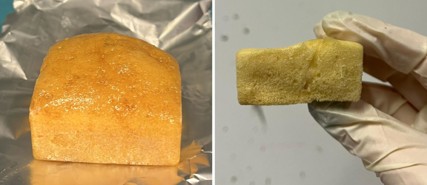
Why does this matter? Well, cyclic carbonates can be used to make polyurethanes, materials we meet everywhere: foams in mattresses and furniture, coatings, adhesives, insulation.
Today polyurethanes are made from fossil raw materials and from isocyanates, chemicals that raise health and environmental concerns. Polyurethanes made from cyclic carbonates, so-called non-isocyanate polyurethanes, avoid both. The chemistry itself is known.
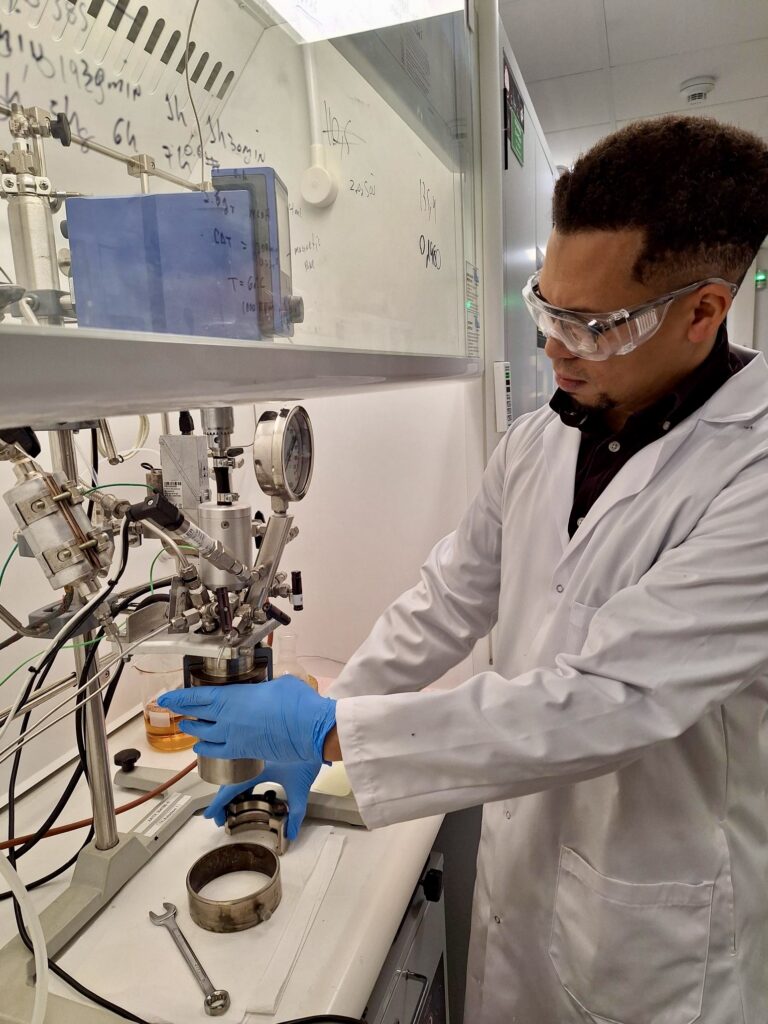
What’s missing is a way to produce these carbonates efficiently and at scale. That’s where my work as a chemical engineer comes in. We develop and test catalysts, study how fast the reactions run and what limits them, and design reactors, preferably continuous ones, that can take the process from small laboratory experiments to larger bench-scale equipment. Along the way we also evaluate safety, energy use and costs, because a green process has to be safe and economically realistic before industry will adopt it.
What are the biggest challenges researchers in your field face today?
Cost. We have known for many years that most of the products, fuels and materials we use every day could be made sustainably from renewable resources. The problem is cost.
Take hydrogen as an example. Most hydrogen today is “gray” hydrogen, made from natural gas, and it costs roughly 1–2.5 US dollars per kilogram. “Green” hydrogen, made from water with renewable electricity, costs about 4–12 dollars per kilogram, several times more. The same is true for bio-based polyurethanes: the gap in production cost compared with the conventional fossil route is still huge.
Much of our research is therefore a steady series of improvements that make the green route cheaper, step by step, until sustainability and profit finally point the same way for the companies that would produce these materials.
How do you think, or hope, your research may influence society?
My hope is that, in the next 10 to 20 years, the process we develop in this project will help the world move from traditional polyurethanes to non-isocyanate polyurethanes on a global scale. It would also be a way to turn Finland’s forest side streams and captured CO₂ into valuable products.
If you hadn’t become a researcher, what profession would you have chosen?
I would most likely be a biologist. I’ve always been fascinated by how different forms of life adapt and by the remarkable things they can do. However, I would probably still be a researcher, just in a different field.
