



News


Five questions for Anna Widlund on pupil motivation and well-being
Anna Widlund is an Associate Professor in Special Education and an Academy Research Fellow at Åbo Akademi University. Her research focuses on the well-being, motivation and learning of children and adolescents, particularly in mathematics.
In her Academy Research Fellow project, MotiWell, she is studying pupils from grade 4 to grade 9 in order to understand how motivation and well-being develop and relate to learning and educational goals, from school year to school year and lesson to lesson.
What sparked your interest in this field of research?
My interest began during my special education teacher studies. Even then, I was fascinated by how important pupils’ perceptions of themselves as learners are.
In schools, we often focus on learning and achievement, and it is easy to believe that good grades are the key to success. However, how pupils view their own abilities, as well as the values and emotions they associate with learning, play a crucial role in how much effort they put in, how persistent they are, and which educational paths they choose. Sometimes these factors matter even more than actual performance.
Why do some pupils consistently underestimate their abilities despite performing very well? Why is this especially common among girls in mathematics? And why do many pupils choose not to pursue mathematics-related studies even though they are interested in and perform well in the subject?
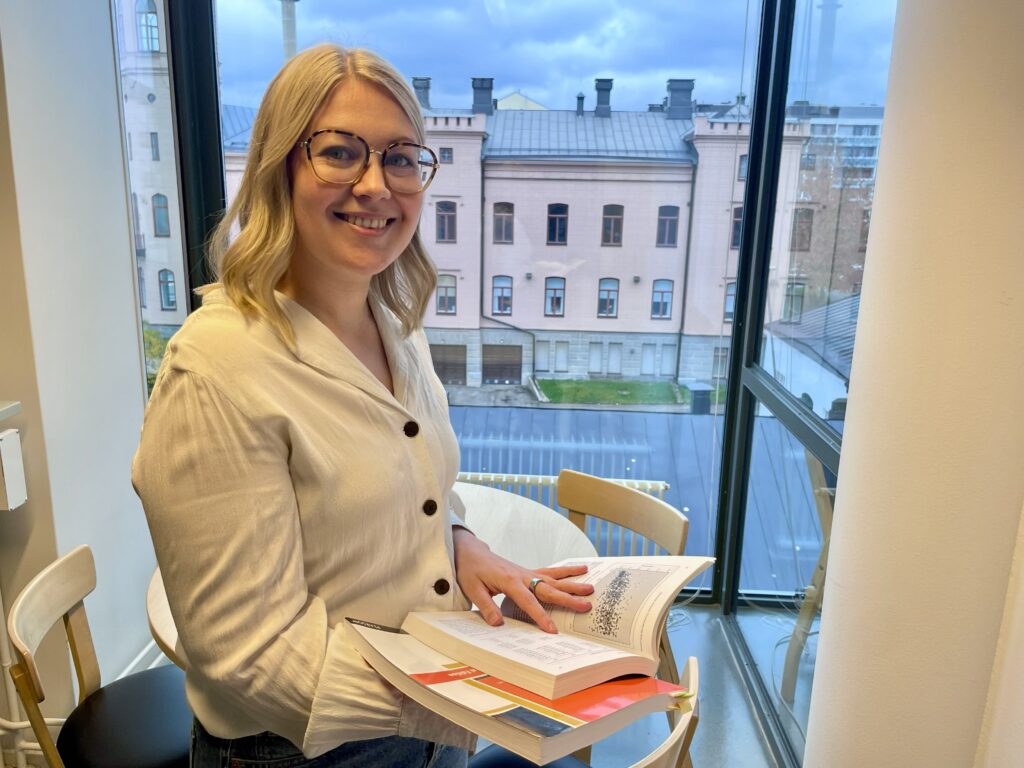
Photo: Catrin Sandvik
Today, we also see increasingly younger pupils experiencing low motivation and school-related fatigue, which hinder both learning and well-being. As a researcher, I want to understand why this happens and how we can support pupils early on.
What is the most unexpected discovery you have made in your research, and why was it significant?
One finding that surprised me was that increased interest in one subject can reduce motivation in another.
When we followed more than 600 pupils throughout lower secondary school, we noticed several negative relationships between motivation in mathematics and motivation in the native language. Pupils evaluate their abilities in one subject relative to other subjects. These comparisons are often tied to self-image, and many pupils tend to see themselves as either a ‘math person’ or a ‘bookworm’. As a result, they begin to value subjects that fit their self-image while devaluing others, even when they perform well in both.
…many pupils tend to see themselves as either a ‘math person’ or a ‘bookworm.’
This division often reflects persistent gender stereotypes, which suggest that mathematics is for boys and reading is for girls. A girl who excels in both mathematics and reading may still come to see herself primarily as good at reading, causing her interest in mathematics to decline despite strong results. Similarly, boys may fail to realise their potential in reading. Most professions require skills from multiple domains, so such stereotypes benefit no one. Instead, they unnecessarily limit pupils’ choices.
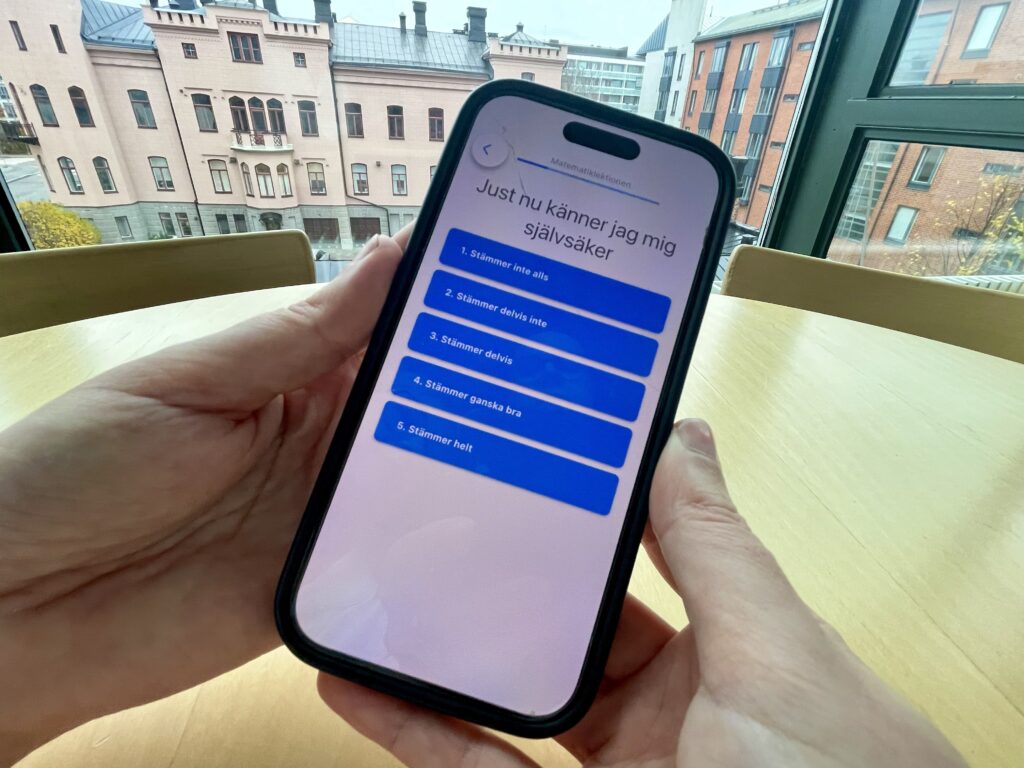
These findings led me to wonder how such beliefs are formed in everyday school life, both within and between lessons. This formed the basis of the MotiWell project, where I observe the motivation and emotions of pupils multiple times during each lesson.
The preliminary findings are exciting. Motivation varies greatly from lesson to lesson, and a pupil’s overall motivation for mathematics says surprisingly little about how motivated they are during any particular lesson. This means every lesson offers an opportunity to make a positive impact.
What are the biggest challenges researchers in your field face today?
I hope my research helps us better understand when and how pupils need support, not only for learning but also for motivation and well-being.
The findings from the project can hopefully be used to better tailor support and educational interventions, prevent negative emotions and pupil exhaustion, and strengthen pupils’ belief in their own abilities at an early stage, before negative patterns become firmly entrenched. I also hope that more pupils will maintain their interest in mathematics and view mathematics-intensive educational pathways as realistic options for themselves.
Because I am responsible for the special education teacher training programme at Åbo Akademi University, I have excellent opportunities to bring research findings directly to future teachers. In this way, knowledge can reach classrooms and contribute to a school environment where more pupils both learn and thrive.
If you had not become a researcher, what career would you have chosen?
Most likely, I would have worked on some kind of development project focused on children and young people.
What motivates me is the opportunity to make a difference and continuously challenge myself, and that is exactly what I value most about my current work. As a researcher, I not only help advance knowledge about children’s and adolescents’ well-being but also contribute to bringing that knowledge into teacher education and, ultimately, into schools. For me, that is incredibly meaningful and important work
