
Program


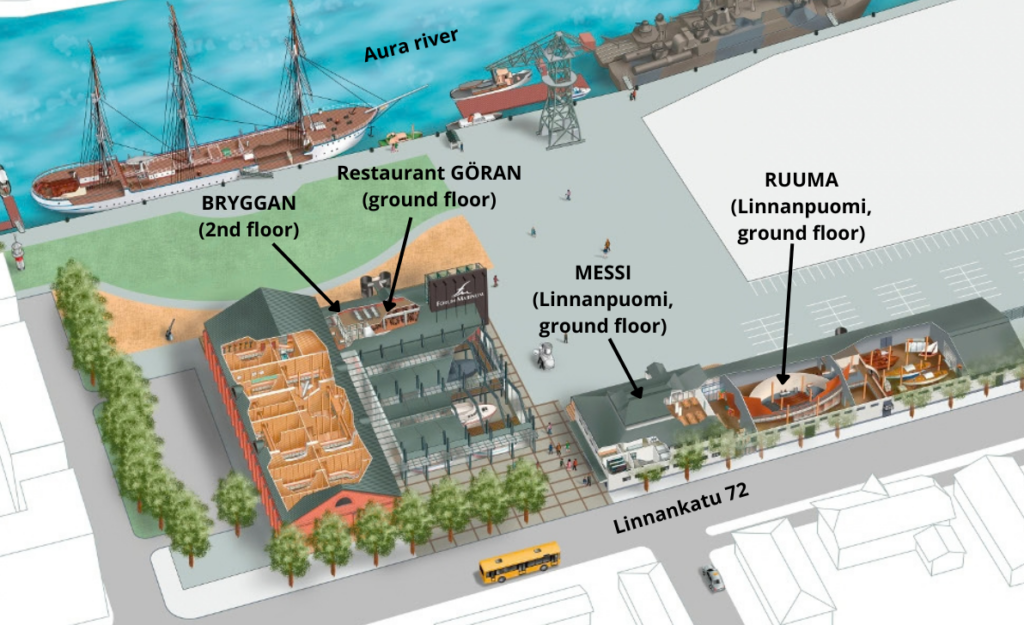
Forum Marinum (Linnankatu 72, Turku)
Wed. 30 September
09:00–09:30 Coffee and Arrivals (Messi)
09:30–09:45 Opening Remarks: Patrik Henelius (Ruuma)
09:45–10:45 Keynote: Søren Frank (Ruuma)
My lecture explores how literature can help us rethink human existence under the unstable conditions of the Anthropocene. Drawing on Blue Humanities and environmental thought, I argue that climate change should not be understood merely as an environmental ”crisis” to be solved, but as a geological and oceanic condition that humanity must learn to live within. Through readings of Danish authors Johannes V. Jensen, Holger Drachmann, and contemporary oceanic theory by thinkers such as Steve Mentz, Elizabeth DeLoughrey, and Jeremy Davies, the lecture examines how literary texts register deep time, sea-level rise, catastrophic change, and adaptation to unruly environments. Rather than offering technological solutions, hope of an Edenic return, or ecological optimism, blue literary history provides what Ottmar Ette calls ÜberLebenswissen: experiential and existential knowledge about how to endure, navigate, and imagine life in increasingly wet, unstable, and unpredictable worlds.
Søren Frank is a Professor of Danish and Nordic Literature at the University of Copenhagen.
10:45–11:00 Break
11:00–12:30 Sessions I & II
Jonas Ullerup Dejgaard, “Gothic Imaginaries at the Danish West Coast”
Magne Drangeid, “Living with Cold Seas: Affect and Constraint in Cold Water Island Literature”
Tuuli Parviainen, “Infusing Marine Community Knowledge into Reimaging Just and Crisis Resilient Marine Futures”
Isabel Arce Zelada, “Decolonising the Caribbean Sea: Tracing Maritime Boundaries”
Juliane Amberger, “(The Art of) Living at the Coast: Human-Sea Relations in Tove Jansson’s Den ärliga bedragaren (1982) – An Ecocritical Blue Approach”
Viktor Emanuelsson, “Making Fun of the Maritime World: August Strindberg’s Ironic Sea Fiction”
Roland Ingelin, “Turning with the Sea: Toward a Phenomenology of the Irony of Water”
Jolanda Linsén & Anna Törnroos-Remes, “How Do We Articulate More-than-Human Organisms and Our Relations with Them?”
12:30–13:45 Lunch (Restaurant Göran)
13:45–15:15 Sessions III & IV
Farideh Amirfarhangi Bonab, “Amid the Water, in Search of Water”
Maria Cullen, “Making Sense of the Vietnamese ‘Boat People’ Exodus: An Examination of the Agency of Humans and the Sea in Maritime Refugee Journeys”
Ulrike Gehring, “The Legibility of the Sea. Seventeenth-Century Marine Paintings as Laboratories of Early Hydrography”
Reetta Sippola, “Material Agency of Environment in the Sea Charts of Cook´s Third Voyage”
Ilona Hongisto, Riikka Niemelä, Niina Oisalo & Joonas Talvila, “Cinematic Imaginaries of Life Underwater”
Zuzanna Legan, “‘A Song Throbbing Underwater’: Creative Practices of Attuning to Aquatic Conversations”
Jane Ruffino, “Useful Beasts: Sharks, Sea Monster Narratives and Submarine Cables”
Alice Sundman, “Experiencing Underwater Milieus: Ocean Creatures and Anthropogenic Impact in Laline Paull’s Novel Pod“
15:15–15:30 Coffee (Bryggan & Messi)
15:30–17:00 Sessions V & VI
Eduardo Abrantes & Laura Hellsten, “Knowledge at Sea – A Case-Study for Transdisciplinary Community Practices for Sustainability”
Angela Iuliano, “Submerged Futures: Retro-Futurism and Dystopian Water-Scapes in Simon Stålenhag’s The Loop and Things from the Flood“
Heini Sorakivi & Heidi Vanhanen, “Our Sea: The Role of Maritime Museums in the Blue Humanities Network”
Thomas Lennerfors, “From Context to Cuteness: On the Representation of the Ocean and Animals in the Shipping Industry”
Emilia Syväsalmi, “Wondering the Depths: Experiences of the Sea and Whales on 19th-Century Whaling Ships”
17:00–18:00 Opportunity to visit Forum Marinum’s exhibition (optional)
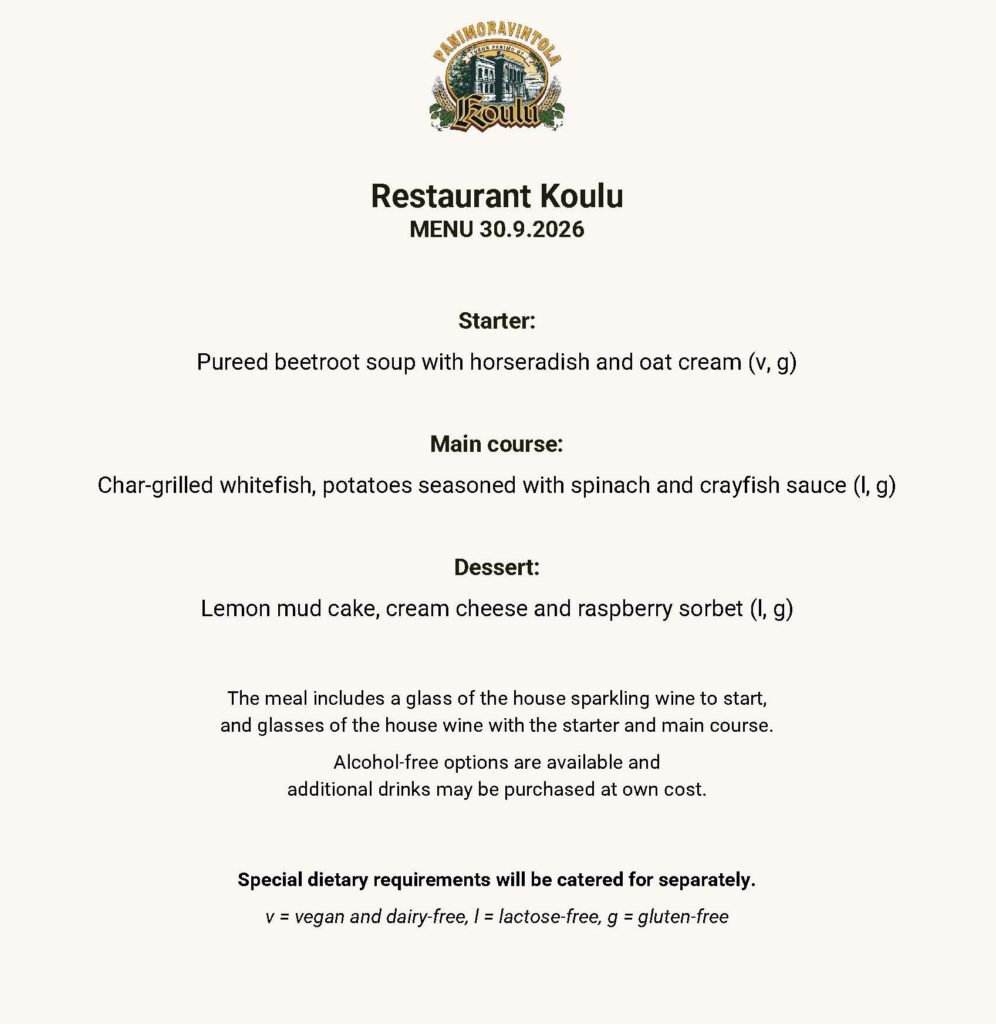
19:00–21:30 Dinner (Restaurant Koulu, Eerikinkatu 18)
• • • • • • • • • •
Thu. 1 October
09:30–10:30 Keynote: Sabine Höhler (Ruuma)
The Anthropocene as a concept for identifying and understanding human agency as a geological force has fostered interdisciplinary approaches to study the entanglements of human and Earth history. In these integrated efforts, the ocean is mostly perceived as a function, an enabling factor, or a casualty: a regulator, a source, a sink. The paper aims to develop the ocean’s elemental position in Anthropocene research and explores how Anthropocene history can address social, cultural, technological and environmental oceanic changes and their implications for ocean governance.
Sabine Höhler is a Professor of Science and Technology Studies (STS) at KTH Royal Institute of Technology in Stockholm where she also serves as the Head of Department of Philosophy and History. She combines an education in physics and in history of science and technology. Her research addresses the intersections of technoscience and environmental history concerning the earth and space sciences in the 19th and 20th centuries in a planetary historical perspective, with a focus on ocean monitoring, mapping, and modelling practices. Since 2024 she leads the Centre of Excellence for Anthropocene History at KTH to develop a new historical approach to integrating human and Earth history.
10:30–11:00 Coffee (Messi)
11:00–12:30 Sessions VII & VIII
Laura-Marie Dehne, “Engaging Technology: From Measuring to Understanding Whale Sharks?”
Inger-Anne Søfting, “The Sea as Supermarket: Anthropocene Wilderness in Paul Lynch’s Beyond the Sea”
Montana Torrey, “What Color Is the Cambrian Sky? Material Thinking with Cambrian Blue Clay”
Peter Björkroth, “Från barnbok till brygga: sjökaptenens heder, litterära narrativ och kroppsligt handlande till sjöss”
Laura Ervo, “Att ge havet en röst: Arters representation och människa‑vattenrelationer i Östersjön”
Carola Nordbäck, “Att tänka med moln och grundvatten: Blå perspektiv i Elin Wägners ekologiska skrivande 1939–1947”
Laura Willström, “En ö och dess språkliga landskap: havet som aktör”
12:30–13:45 Lunch (Restaurant Göran)
13:45–15:00 Sessions IX & X
Shaonli Bhowmik, “Oceanic Untouchability: Caste, Toxicity, and Stratified Waters in the Blue Anthropocene”
Firouz Gaini, “The Water at the Navel of the World – Water and people in the Faroe Islands”
Christian H. Voie, “‘The Great Drying’: Writing the Devastated Freshwaterscapes of the Anthropocene and the Biodiverse Potential of their Restoration”
Olivia Franck, “The Sea, the Woman and the Life in Turku Archipelago – Belonging/Unbelonging Behind the Liminal and Gender-coded Space of Ferries”
Fredrik Leijonhufvud, “Boatbuilding Traditions around the Åland Sea as a Historically Interconnected Maritime Knowledge System”
Krystyna Pirogowicz, “Nathan Söderblom’s Mare Lutheranum. The Baltic Sea as a Religious Concept”
15:00–15:15 Coffee (Messi)
15:15–16:00 Panel Discussion (Ruuma)
Summarising the symposium’s themes, discussions, and insights, this panel examines the current state as well as future promises and challenges of human-sea interactions. On a warming planet, on the shores of rising oceans, what role do the humanities and social sciences play in raising awareness and critically examining these interactions — historically, today, and tomorrow?
Our keynotes, Søren Frank (University of Copenhagen) and Sabine Höhler (TH Royal Institute of Technology), are joined by Professor of Literature Maria Österlund (Åbo Akademi University) for a discussion moderated by Otso Kortekangas (Åbo Akademi University).
16:00–16:15 Closing Remarks: Robert Louhimies (Ruuma)
16:15–18:00 Opportunity to visit Forum Marinum’s exhibition (optional)
Please note that changes in the program are possible.
The symposium is organized as an in-person event only.