


News


The Åboat research vessel paves the way for future fieldwork
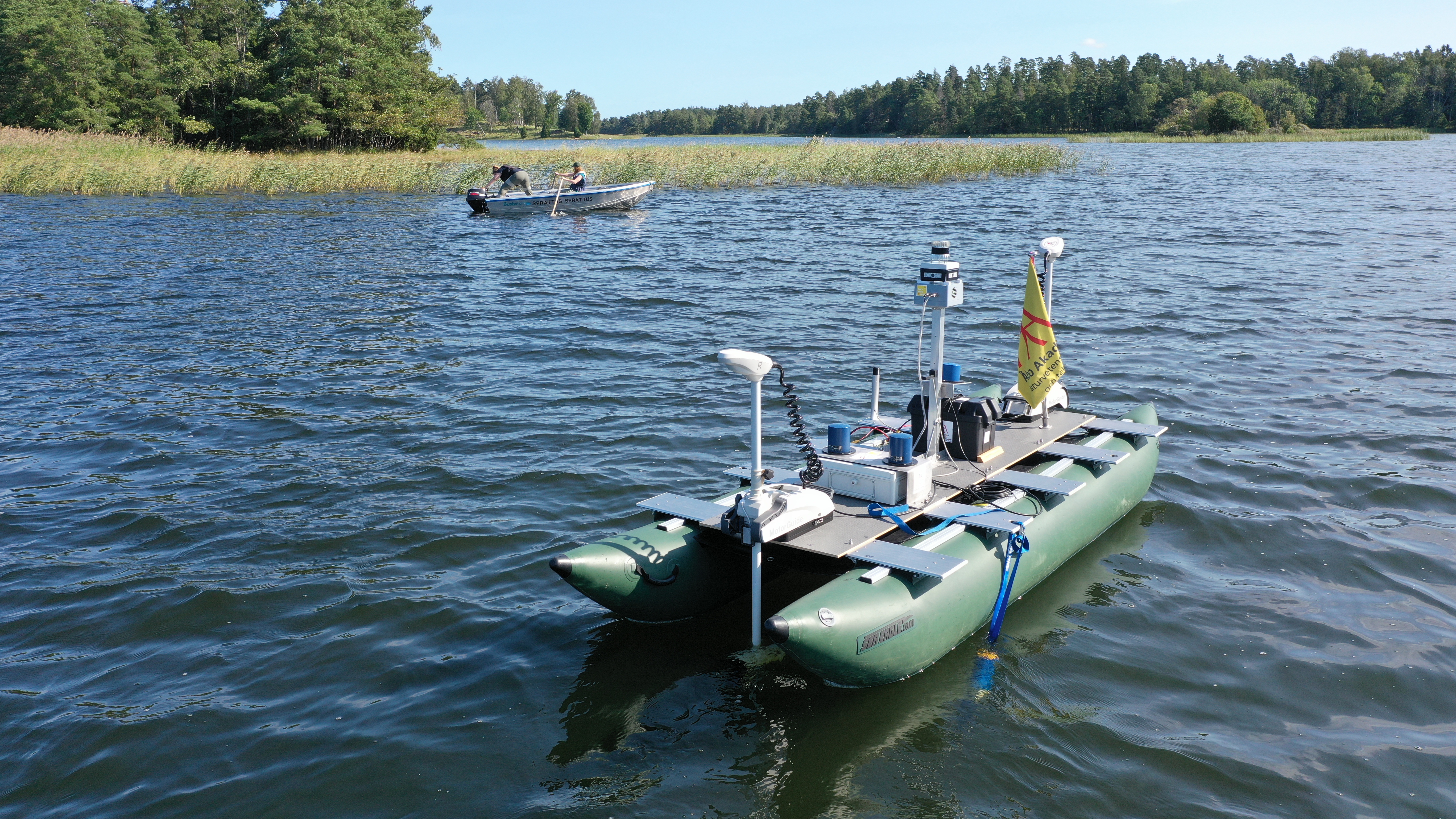
The Åboat platform, a remotely controlled research boat developed by the IT unit at Åbo Akademi University, was deployed and tested in the beautiful
surroundings of Åbo Akademi University’s biological station on Husö, Åland.
Tests were conducted on a new Real-Time Kinematic (RTK) GPS receiver developed over the summer, utilising the FINPOS RTK service provided by the National Land Survey of Finland. A RTK-enabled GPS receiver processes standard signals from Global Navigation Satellite Systems (GNSS) in conjunction with a correction data stream, enabling positional accuracy on the order of one centimetre.
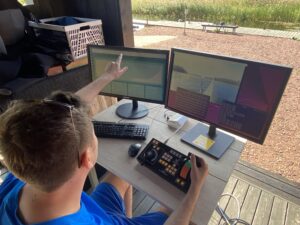
In addition, in collaboration with the subject of Environmental and Marine Biology, the Åboat platform was used to collect and log a range of water quality parameters, including temperature, salinity, dissolved oxygen, pH, and turbidity.
“It is highly rewarding to observe the work of our master’s students and summer trainees being applied to a practical use case, thereby contributing to ongoing research in environmental and marine biology. The overarching objective of the Åboat platform is to develop into a fully autonomous system capable of performing monitoring and search operations on water. This advancement can be supported by the valuable infrastructure provided by Åbo Akademi University’s Biological Station in Husö” says Sébastien Lafond, Professor of Software Engineering at Åbo Akademi University.
“It is important that subjects collaborate in order to increase the spatial and temporal resolution of environmental data collection, and most importantly, to start analysing vast amount of retrieved ‘big data’ available to, for example, identify climate change hot spots and equally refugia for marine life of the Archipelagos of Southwest Finland and beyond” says Christian Pansch-Hattich, Professor of Marine Ecology.
While the Åboat crew was out collecting remote data, students of Environmental and Marine Biology rowed across Husöviken to scoop up water samples.
“It’s been a great experience to see the Åboat in action and its manoeuvring in Husöviken, with technical equipment right beside drying wetsuits and tangles of fishing nets. The mix of gear, know-how, and smooth teamwork in the bay gave an inspiring glimpse of how future fieldwork could look if we collaborate and combine our strengths and knowledge.”, says Dr. Giannina Hattich.

You might also be interested in
-
SOS endorsed as a UN Ocean Decade Action
The SOS Centre for Sustainable Ocean Science at Åbo Akademi University has been officially endorsed as a UN Ocean Decade Action. This recognition connects SOS…

-
New Study Shows High Human Impact on Ecosystems in the Åland Archipelago
A newly published study from Åbo Akademi University shows the significant influence of human-induced pressures on the structure and functioning of coastal invertebrate communities in…
-
The Åboat shows Turku from a new perspective
In the beginning of the summer a team from the department of Information Technology at Åbo Akademi University did a test with their autonomous boat…