


News


Technology meets sustainability – Cataldo’s research seeks the optimal for each energy process
How can today’s energy needs be met by using sustainable alternatives, and how can this be done efficiently? These are questions that Cataldo De Blasio has devoted his research career to finding answers to. Right now, the focus is on exploring how biomass and ammonia can be used as energy sources and in various energy conversion technologies. In October, he will be appointed professor of energy technology at Åbo Akademi University.
– There is one thing I always emphasize, and that is engagement with local companies and industries, says Cataldo De Blasio right at the start of our conversation.
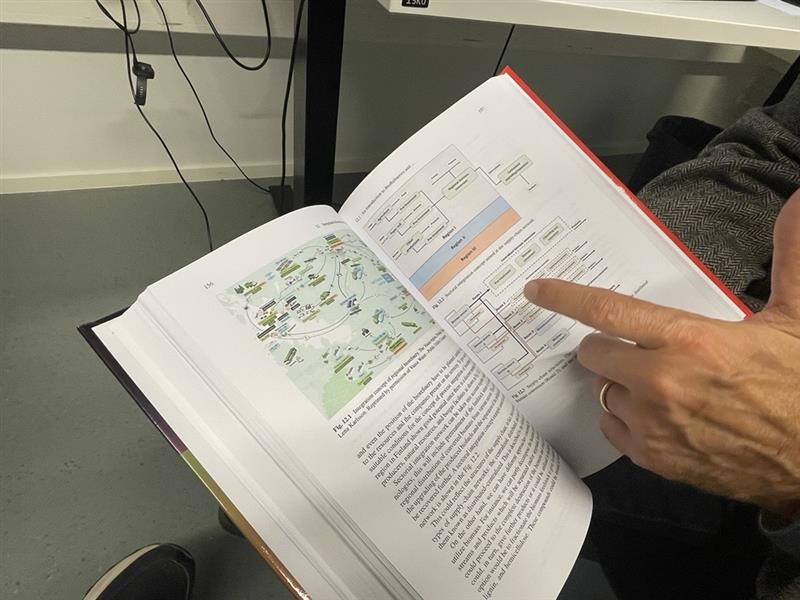
He picks up his red book, a comprehensive 400-page work on biomass, and points to example sketches and flow charts showing how to work with efficient energy solutions in Ostrobothnia and Vaasa, where he works as a professor.
In the book, he explains everything you could want to know about methods used for quality assessment of biomass, summarizes the most important processes to produce biofuels, and provides the reader with the knowledge needed to search for, evaluate, and select data for mass and energy balance calculations. Next in line is a similar book on gas technology, which is currently in progress.
– The research mission of my group is to develop optimal solutions for reducing environmental impact. For example, how can we utilize energy and mass streams from industry by products and turn it into something useful instead of flushing it away? How can we use the gas produced from biowaste, for example, to our advantage? The answer lies in how the process is designed.
Since autumn 2025, De Blasio has also been appointed the Head of the Laboratory of Energy Technology. He is also active with experimental research, which is done in Aurum building in Turku.
– Process and Reactor Design, Chemical Reaction Engineering, Simulation, Optimization, Integration: these are the cornerstones of our work. If you want to reduce emissions, the answer is to save energy. How to do this in the most optimal way is the goal of our work, often in collaboration with local actors in our projects. The hope is that the effects and results can be spread to all regions and globally. .
Ammonia and biomass as fuel
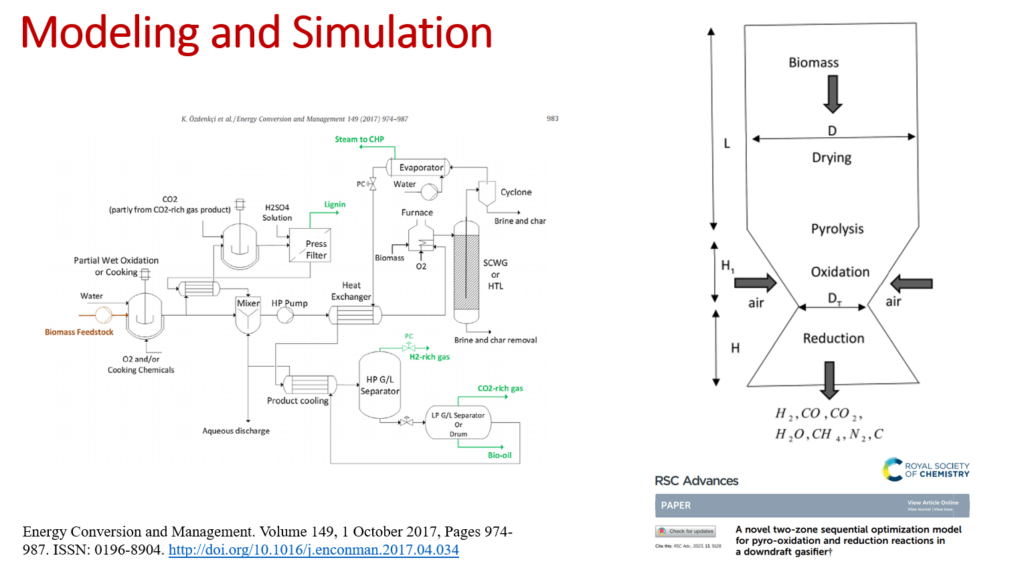
De Blasio opens a presentation on his computer and shows an example of what a flow chart might look like. This is what he has devoted much of his career to: from a PhD in 2010 at Åbo Akademi University, via Aalto University, and back to ÅAU and energy technology in Vaasa in 2018. Today, his work involves sustainable energy technology in various forms. He is the project manager for large national and international research projects and also supervises students and doctoral candidates.
Picture: Private
– For example, we are studying the use of ammonia in energy applications and also looking at the societal acceptance perspective. A major challenge is the prejudices associated with the use of ammonia as an energy carrier, such as the belief that it is dangerous, toxic, explosive and causes emissions that are harmful to the environment. We are analyzing how best to produce and utilize the substance for specific applications.
Ammonia is a molecule that can be used to store green hydrogen in liquid form. The substance can be used in engines, burners and fuel cells, for example, and its use is predicted to increase in the near future as many countries strive to achieve the UN’s carbon neutrality goals.
– All these technologies require either part or almost all of the ammonia to be converted back into hydrogen. We therefore need so-called cracking technologies for ammonia, i.e. processes that split the chemical molecules into simpler components. At the same time, we need to be able to make these energy processes efficient.
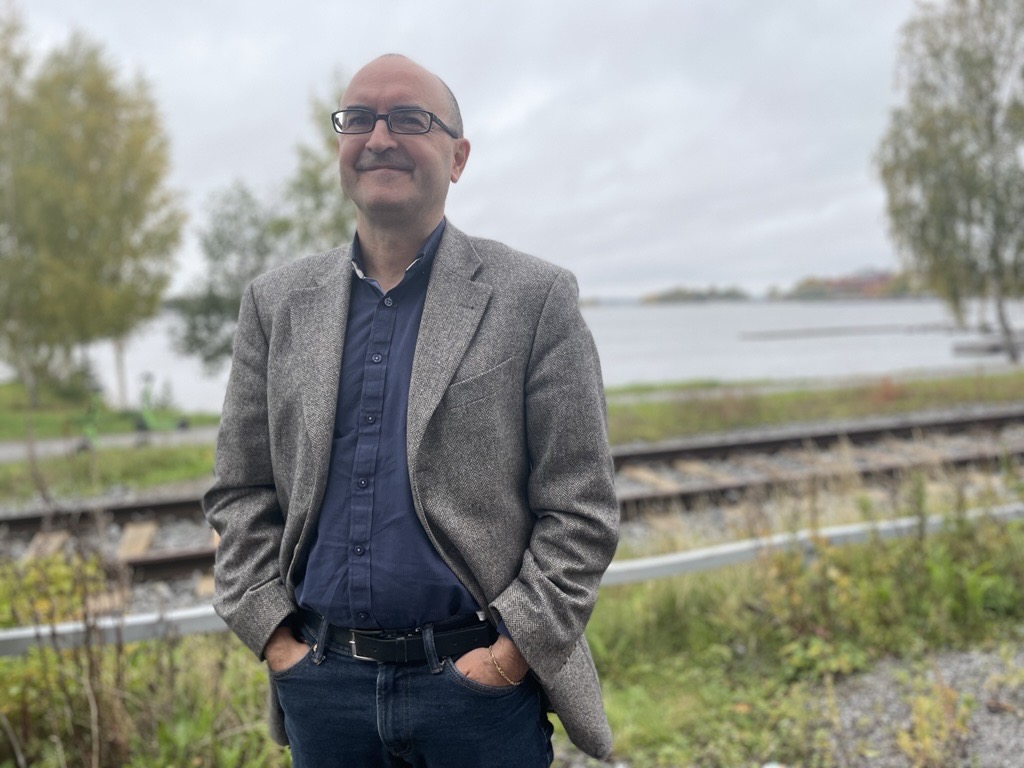
In another project led by De Blasio, researchers are working to develop a process for locally managing forest residues to produce a sustainable component for fuel blends.
– Companies and industries depend on forests. Forest residues such as bark and sawdust from sawmills are often burned. If we succeed in refining these residues into fuel for machines, it could help meet the EU’s renewable energy directive requirement of 5.5 per cent for advanced biofuels. Everything is connected: reducing the burden on the environment through smart solutions to save money. That is what energy technology is all about.
