




Keynotes
Why Is Monolingualism So Stable? Multilingual Childhoods, Monolingual ECEC and Questions of Equity
Verena Platzgummer, University of Galway, Ireland
Similar to what is often stated about multilingualism more broadly, multilingual ECEC contexts should be regarded as the norm rather than the exception. Yet, many ECEC contexts are multilingual by virtue of the children attending them, while multilingual pedagogies in ECEC remain the exception. Rather than focusing on how such pedagogies might be implemented more widely, I will ask why monolingual orientations remain so remarkably stable in ECEC.
Drawing on ethnographically informed work in a linguistically diverse, yet institutionally monolingual ECEC setting in South Tyrol, Italy, I argue that the persistence of institutional monolingualism cannot be adequately understood within ECEC alone. While education policy, teacher education and the structural conditions of ECEC provision are undoubtedly part of the picture, understanding this persistence requires situating ECEC within the broader material, political and economic conditions of our societies. I will argue that this broader perspective can help sharpen our lens on equity in ECEC and will consider its implications for how we might move towards more equitable multilingual childhoods.
Biography
Verena Platzgummer is Lecturer in German at the University of Galway. Her research adopts a critical sociolinguistic approach to linguistic repertoires, language ideologies, and language policy. She examines how globalisation reshapes historical minority language spaces, with a particular focus on multilingual families and early childhood education settings in two such contexts: the officially trilingual province of South Tyrol in Italy and the Gaeltacht regions of Ireland.
The Hard Core and the Soft Spots: Policy, Population and Pedagogy in Swedish Immersion
Mari Bergroth, University of Helsinki, Finland
Karita Mård-Miettinen, University of Jyväskylä, Finland
We celebrate 40 years of Swedish Immersion—an educational programme designed to support multilingual learning, originally developed for majority-language speakers seeking to acquire the country’s less widely spoken official language.
Building on our prior research backgrounds in Swedish immersion, we retain a certain soft spot and professional commitment to advocate for this additive bilingual programme. While language immersion is sometimes portrayed as an easy and effective path to language learning, we emphasise that the programme’s success rests in sustained research-based pedagogical effort and policy development. This forms the hard core of the programme. Swedish immersion in Finland represents a rigorous and carefully constructed approach to bilingual education. At the same time, we note a growing discourse that seeks to criticize immersion and attempts to achieve more with less effort by weakening the core itself to provide lighter versions.
As the surrounding linguistic landscape has evolved around Swedish immersion, and as our personal professional trajectories have gradually expanded beyond immersion toward other approaches to supporting multilingualism, it is now timely to reassess our standpoint to the programme, both the hard core and the soft spots. To do this, we aim to identify enduring core strengths of immersion education while also highlighting areas that warrant renewed critical attention.
Biographies

Mari Bergroth is a Senior Lecturer in Education at the University of Helsinki and holds a Title of Docent (Associate Professor) in language immersion and linguistic diversity at Åbo Akademi University. Her research interests include child and family bilingualism and multilingualism, language-aware teaching and societal language education policy discourses on bilingualism and multilingualism. She is currently the PI of the project developing a digital assessment tool for Swedish as a second language in Swedish medium schools, funded by the Finnish National Agency of Education. https://blogs.helsinki.fi/s2lverktyg/briefly-in-english/
Karita Mård-Miettinen is a Professor in Applied Linguistics at the University of Jyväskylä. She has conducted ethnographically oriented research in the contexts of bi- and multilingual education and early foreign language education with the focus on multiliteracies, multilingualism, multilingual pedagogies and language education policies. She is currently the PI of the project Redesigning Early Foreign Language Learning through Multiliteracies (MultiELL), funded by the Research Council of Finland (2024–2028), https://www.jyu.fi/en/projects/multiell
Balancing Content and Language – Some Insights for Immersion and CLIL from an Irish context
Aisling Ní Dhiorbháin, Dublin City University, Ireland
Irish immersion education has proven itself to be the most effective educational model for children to develop communicative proficiency in Irish. Yet, balancing language and content in immersion programmes is complex. Children attending immersion schools need specific supports to acquire language that is grammatically accurate and to develop academic language in Irish. This paper presents research from an Irish context showing interventions to support the teaching of both language and content in immersion and CLIL programmes. Ireland is now at a pivotal point where the government are reluctant to provide any more immersion schools and expectations are increasingly shifting towards CLIL in English-medium schools to promote competence in Irish. Consideration will be given to the opportunities and challenges this presents, as well as some possible ways forward.
Biography
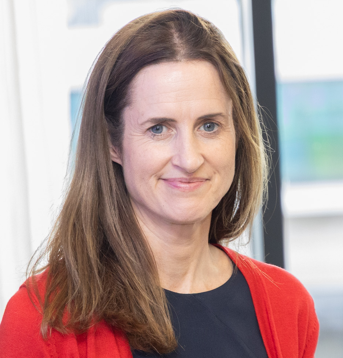
Aisling Ní Dhiorbháin is an Associate Professor in Teagasc na Gaeilge (Teaching Methodology of Irish) in the Institute of Education, Dublin City University. She is Director of Sealbhú: DCU Research Centre for the Teaching and Learning of Irish. Aisling is a former Irish-medium immersion teacher. She is interested in all aspects of immersion and content and language integrated learning and she has many related publications. Aisling has acted as a principal investigator on various research projects related to the teaching and learning of Irish. She is a member of the Department of Education and Youth Steering Committee to introduce CLIL through Irish in English-medium schools.
Reimagining language immersion programs for multilingual learners
Stephen Davis, University of Regina, Saskatchewan, Canada
Language immersion programs are becoming increasingly culturally and linguistically diverse worldwide as a result of global migration. In the Canadian context, French immersion programs have traditionally served predominantly English-speaking, Canadian-born students and families in their pursuit of bilingual education in Canada’s two official languages, French and English (Genesee, 1984; Lambert & Tucker, 1972). However, many multilingual, immigrant families are interested in French immersion programs (Dagenais & Moore, 2008; Davis et al., 2019, 2021). Whereas multilingual, immigrant students tend to develop strong language proficiency in French immersion (Bourgoin & Dicks, 2019; Mady, 2015, 2017), such students are often excluded from immersion programs on the basis of their diverse linguistic repertoires (Bourgoin, 2016; Davis, 2019; Mady & Masson, 2018). Moreover, some educators believe that French immersion programs are appropriate for certain multilingual, immigrant students, but not necessarily for refugee-background students who might be facing significant challenges in their lives (Davis, 2024). In this keynote lecture, we will explore diverse perspectives and language ideologies with respect to multilingual students in Canadian French immersion programs. Drawing parallels between the Canadian and Finnish contexts, we will examine the critical questions and pedagogical implications of reimagining language immersion and content and language-integrated programs for multilingual learners worldwide.
Biography
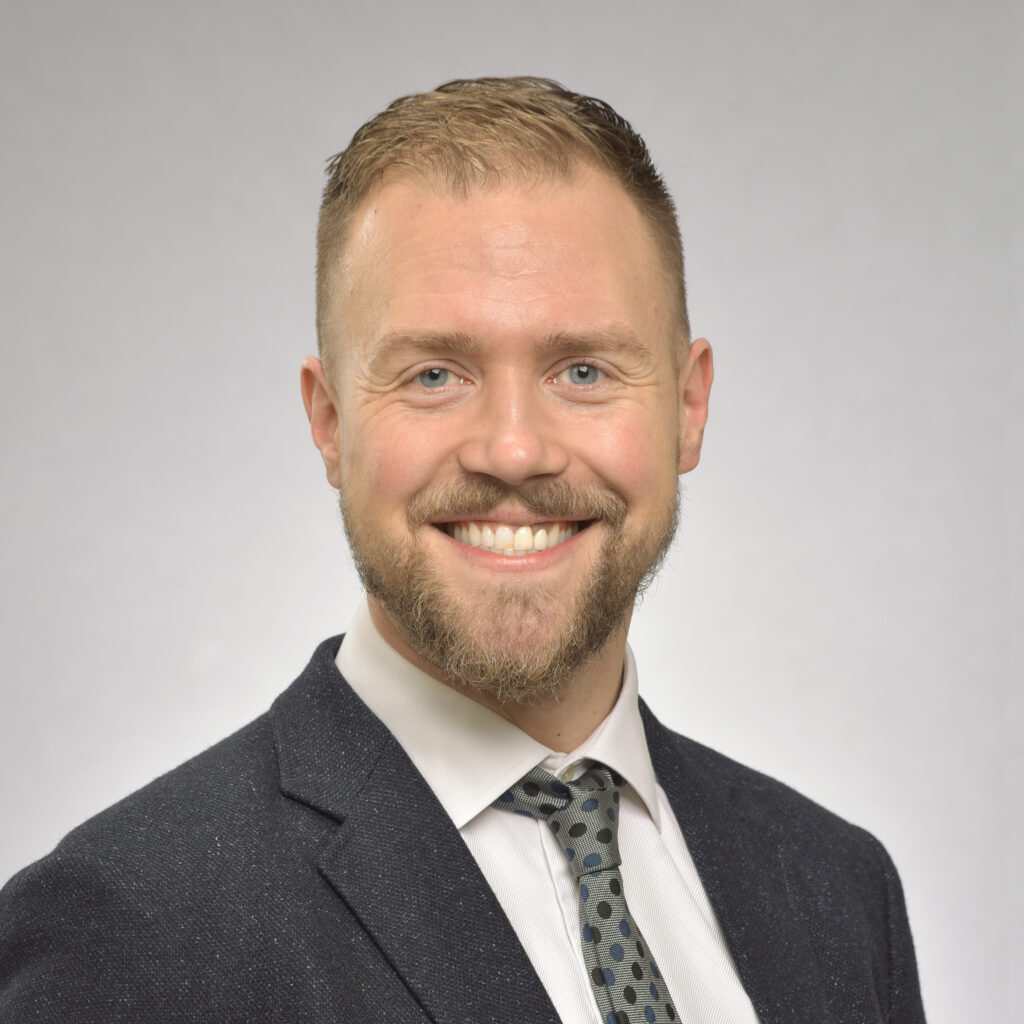
Dr. Stephen Davis is an Associate Professor and Director of the Baccalauréat en éducation française program in the Faculty of Education at the University of Regina in Saskatchewan, Canada. He has also taught in French immersion programs and in language education programs for refugee-background students in Canada and internationally. Stephen’s research interests include French immersion programs, immersion pedagogy, multilingual education, language ideology, language-in-education policy, refugee studies, and plurilingual pedagogical approaches. Through his research, teaching, and service, Stephen advocates for multilingual education and for equitable and inclusive language immersion programs in Canada and beyond.