


Lignin Workshop 2025: ‘‘Lignin to X – Challenges and Potential”


Lignin to X – Challenges and Potential
Lignin, the abundant natural aromatic polymer, constitutes about one-quarter to one-third of wood and many lower plants. Despite its potential, lignin is predominantly burnt for energy in most current forest industry processes.
As we transition toward a sustainable bioeconomy, the efficient and innovative utilization of lignin is more crucial than ever. This workshop will serve as a platform for academia and industry to come together, addressing the challenges and unlocking the vast potential of lignin utilization. This year’s theme is “Lignin to X – Challenges and Potential“.
Date: 20th – 21st of August, 2025
Venue: Aurum Building, Åbo Akademi University, Henrikinkatu 2, 20500, Turku, Finland
Registration is closed.
Key Highlights:
Invited Speakers. Experts in lignin research will share the latest advancements in biomass fractionation, lignin chemistry, utilization, and analytical methods.
Industry Engagement. Industrial representatives will contribute through talks or participate in a dynamic panel discussion, highlighting the practical impact of lignin research.
Opportunities for Junior Researchers. PhD students and early-career researchers will showcase their work through a poster session. 3 ECTs could be awarded to PhD students by poster presentation and assignment (To be clarified).
The workshop is jointly organized by doctoral education network CIMANET (funded by Ministry for Education and Culture) and several research consortia D2V, Depoly2Ols, GRAM (funded by Business Finland).
Invited speakers:
- Virpi Puhakka, Valmet, Finland
- Orlando Rojas, University of British Columbia (UBC), Canada
- Joseph Samec, Stockholm University, Sweden
- Gyu Leem, SUNY ESF, US
- Monika Österberg, Aalto University, Finland
- Narayanan Rajagopalan, Technical University of Denmark (DTU), Denmark
- Liyang Liu, Chalmers University of Technology, Sweden
- Gerd Unkelbach, UPM, Finland
- Johan Gising, AB Karl Hedin Bio Innovation, Sweden
- Maria Björk, Stora Enso, Finland
- Hanna Karlsson, Valmet, Finland
- Sanna Valkonen, UPM, Finland
- Lari Vähäsalo, CH-Bioforce, Finland
- Thomas Rosenau, BOKU University, Austria
- Anna Happonen, Luke, Finland
- Martin Lawoko, KTH, Sweden
- Giada Lo Re, Chalmers University of Technology, Sweden
- Pedro Fardim, KU Leuven, Belgium
- Timo Leskinen, University of Helsinki, Finland
Tentative agenda
20.8.2025 Wednesday
8:00-8:30 Coffee and Registration, poster setup
8:30-10:00 Opening and Presentation from Invited Speakers X 3
10:00-10:30 Stretching break
10:30-12:30 Presentation from Invited Speakers X 2 and Flash Presentation X 6
12:30-13:30 Lunch
13:30-15:00 Presentation from Invited Speakers X 3
15:00-15:30 Coffee break
15:30-17:30 Industrial talks X 3, Panel discussion, and Flash Presentation X 3
17:30-18:30 Poster and Refreshments
19:00-22:30 Dinner
21.8.2025 Thursday
8:30-9:00 Morning Coffee
9:00-10:30 Presentation from Invited Speakers X 3
10:30-11:00 Stretching break
11:00-13:00 Flashing presentations X 6 and Poster session
13:00-14:00 Lunch
14:00-15:40 Presentation from Invited Speakers X 3
15:40 End of the Program
15:40-16:30 Lab tour in two groups
See the detailed program here. Find the list of poster sessions here.
Introduction to invited speakers
Virpi Puhakka is the Ecosystem Director at Valmet, leading R&D collaboration within the partner network. She holds a Master’s degree in Industrial Engineering and Management and a Doctorate in Technology from Tampere University of Technology.
Orlando Rojas is the Canada Excellence Research Chair at the University of British Columbia (UBC) and Director of the Bioproducts Institute. His research focuses on bio-based materials and soft matter. He is internationally recognized for his contributions to renewable materials science, and has received several prestigious honors, including the Anselme Payen Award, the highest distinction in cellulose and renewable materials research. He is an elected Fellow of the American Chemical Society (2013), the Finnish Academy of Science and Letters (2017), and the TAPPI Association (2025). Earlier in his career, he served as a Finland Distinguished Professor and was named an inaugural Faculty Scholar at North Carolina State University. Prof. Rojas maintains active collaborations with institutions across Europe, the Americas, and Asia. He serves on the Selection Committee of the Marcus Wallenberg Foundation and holds scientific advisory roles with organizations including the Max Planck Institute of Colloids and Interfaces, the VALUED Project (with Imperial College London, University of Bristol, and University of Cambridge), and the Materials Institute of the University of Santiago de Compostela. He is Emeritus Editor of the Journal of Dispersion Science and Technology and Associate Editor of ACS Biomacromolecules. He is ranked among the top 1% of researchers globally by citations (Clarivate, Web of Science).
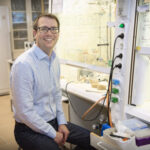
Joseph Samec is a Professor at Stockholm University, Sweden. He received his Ph.D. from Stockholm University in 2005 with Prof. Bäckvall as supervisor. He did a short research exchange for Prof. C. P. Casey at the University of Wisconsin, Madison. After a postdoctoral training with Prof. R. H. Grubbs at California Institute of Technology during 2006-2007, he was appointed as Assistant Professor at University of Uppsala in Sweden in 2009 and was promoted to Associate Professor in 2011. Currently, he is Professor at Stockholm University. His research interests are green chemistry in organic synthesis and biomass valorization with a focus on lignin. He has co-founded 3 companies: 2012, RenFuel, that produces biofuels from lignin; 2015, RenCom (now Lignin Industries) that produces thermoplastics from lignin; 2018, LigniCore, that produces thermosets from lignin.
Gyu Leem is an Associate Professor at State University of New York College of Environmental Science and Forestry (SUNY ESF), US. His research group focuses on the selective depolymerization of lignin, a complex and recalcitrant biopolymer abundant in biomass, to generate high-value aromatic chemicals and renewable fuels. The overarching goal is to address the challenges of lignin valorization by developing photoelectrochemical systems that enable controlled chemoselective cleavage of C–O and C–C bonds under mild conditions
Monika Österberg is a Professor in bioproducts chemistry at Department of Bioproducts and Biosystems at the School of Chemical Engineering, Aalto University, Finland. She is currently the research PI of FinnCERES Competence Centre for Materials Bioeconomy and the CIMANET Circular Materials Bioeconomy doctoral education network. She is also member of the Finnish Forest Bioeconomy Science Panel. She received her PhD in Surface Chemistry from the Royal Institute of Technology (KTH) in 2000. In 2012, she joined the faculty of Aalto University and was tenured in 2016. Her research aims to enhance the sustainable use of natural resources, with research interests in fundamental interfacial phenomena of forest biomaterials like lignin, cellulose and bark extracts, and the development of new materials from these polymers. Lignocellulosic nanomaterials and resource efficiency are key focus areas.

Narayanan Rajagopalan is an Assistant Professor at the Technical University of Denmark (DTU), Danmark, affiliated with the CoaST Research Centre in the Chemical Engineering Department. One of his research areas currently revolves around understanding lignin through coatings science & technology. He explores how lignin can be utilized most effectively in anticorrosive coatings. Specifically, a significant part of his work focuses on the molecular-level behavior of lignin in coatings: how it influences water transport, adhesion at the metal interface, and long-term barrier performance. In addition to lignin, he also works on non-biocidal strategies for antifouling coatings, particularly those that rely on controlled water interactions and self-polishing mechanisms. Overall, his group is involved in designing functional coatings tailored to specific environmental requirements, as well as conducting in-depth studies on coating degradation and failure mechanisms, ranging from controlled lab-scale testing to real-world field applications.
Liyang Liu is an Assistant Professor at Chalmers University of Technology, Sweden, leading the Lignin Science and Technology group within the Division of Chemical Engineering. Dr. Liu is also affiliated with the Wallenberg Wood Science Center. He earned his Ph.D. from the University of British Columbia (Canada) and completed postdoctoral work at Stockholm University (Sweden). His research aimed at investigating the reaction and structure of lignin and wood and converting these biomacromolecules into advanced materials in greener and efficient ways. Critical to the rational design of lignin-based materials is understanding their structure-properties by applying the fundamental principle of polymer science. His group will develop engineering processing methods, create advanced characterization and materials assembling means, and train researchers at different levels. These will finally contribute to the long-term sustainable development goals of our society.
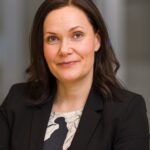
Sanna Valkonen is the Senior Manager of R&D and Technology at UPM. Sanna Valkonen (M.Sc. Chemistry) has been involved in the lignin-related development activities at UPM since 2009, with responsibilities spanning product and application development, business development, and technical sales and marketing. After building the lignin business in UPM Biochemicals for 13 years, she returned to UPM R&D. In her current role as Senior Manager in UPM R&D & Technology, she leads the UPM Chemicals R&D team, and oversees the research of future innovations and technologies in the field of lignin valorisation, and the chemical conversion of lignocellulose into valuable chemicals.
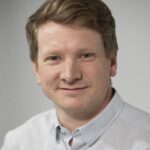
Johan Gising is the CEO of AB Karl Hedin Bio Innovation, Sweden. He is a medicinal chemist by training with over 15 years of experience in modification and optimization of molecular properties. Since 2022, he has served as CEO of AB Karl Hedin Bio Innovation, with the objective to valorize sawmill side streams into new materials. His current focus is on tailoring the properties of lignin for use in emerging technologies, including organic batteries, carbon materials, composites for 3D printing, and sorbents for metal and organic pollutants removal.
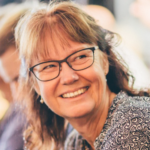
Maria Björk is the Director of External R&D and Environment at Stora Enso Biomaterials. Maria graduated in 1987 from Chalmers University of Technology and has thereafter long experience of supporting pulp production units in Stora Enso. Maria is based in Karlstad, Sweden. Her current focus is on lignin production and sustainable battery materials.
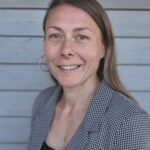
Hanna Karlsson is Business Development Manager – Lignin Technology at Valmet, where she focuses on advancing the commercial production and use of lignin, and supporting customers in unlocking the value of this underutilized raw material. She holds a Master’s degree in Chemical Engineering from Chalmers University of Technology and has been working with lignin since 2008, when Valmet acquired the LignoBoost technology. Over the years, she has held several key roles within Valmet’s lignin operations. She was the lead process engineer for the design and start-up of the second commercial LignoBoost plant at the Stora Enso Sunila mill in Finland, and later served as LignoBoost Technology Manager, heading the team responsible for process design, equipment selection, and R&D related to lignin extraction and refining. It is worth to mention that Valmet is a leading global supplier of technologies and services for the pulp, paper, and energy industries. Its LignoBoost process enables the production of a sustainable, bio-based raw material from pulp mill black liquor.
Gerd Unkelbach is the Director of Molecular Bioproducts R&D at UPM. After training as a chemical laboratory technician, Gerd Unkelbach studied chemistry at the Bonn-Rhein-Sieg University of Applied Sciences. Since 2005, he is working on the chemical utilisation of renewable raw materials, initially at the Fraunhofer Institute for Chemical Technology ICT. In 2010, he moved to the newly founded Fraunhofer Centre for Chemical-Biotechnological Processes CBP, which he headed from the beginning of 2012, and completed his doctorate at the University of Stuttgart while working. Since June 2022, he is responsible for the corporate research division ‘Polymers & Molecular Bioproducts’ at UPM. He is a member of the Saxon Academy of Sciences, Dechema and the board of BioEconomy e.V.
Lari Vähäsalo is the R&D Director at CH-Bioforce Oy. Lari Vähäsalo is a chemistry expert with specialties in wood and paper chemistry, biomass fractionation, analytical, organic and process chemistry. His widely published, industry funded research at the Åbo Akademi university both before and after his PhD has aimed at developing new analytical techniques for laboratories and on-line applications in the paper industry. One of his key achievements was the introduction of Flow Cytometry to the paper industry – today used by virtually all chemical distributers. Mr. Vähäsalo has also successfully solved real-life deposition problems in mills around Europe. During his PhD, he developed a system called DepoSense, which detects deposits by analysing the sound made by the paper machine’s press section. The method is patented by Mr. Vähäsalo. In addition to his research projects, Mr. Vähäsalo has worked as an independent process chemistry consultant. One of his specialties is chemometrics – multivariate data analysis of process chemistry. Mr. Vähäsalo owns Oy ACSI-Solutions Ab, a company focusing on multivariate data analysis, such as analysing and reporting the status of a chemical plant’s process with several thousands of signal inputs. He was also co-founder and chairman of the board in Arbonova, a company dealing in high purity biomass derivatives, such as antioxidants and phytochemicals. Arbonova has about 160 customers in 40 countries and owns two worldwide patents on the extraction and use of lignans, both registered by Mr. Vähäsalo. In 2007, Mr. Vähäsalo was one of the driving forces in developing a hemicellulose extraction process, which later became the starting point of hemicellulose extraction and utilisation research in the Finnish Forest Cluster Future Biorefinery (Fubio) project. In 2011, he was part of developing a new hemicellulose extraction method, unrelated to the Fubio process. This method was further enhanced to include the extraction of lignin without sulphur and became the base for current BIOFORCENSE®-technology. To take the technology further, Mr. Vähäsalo co-founded AB BLN-Woods Ltd which is the second largest owner of CH-Bioforce Oy.
Thomas Rosenau is a professor at BOKU University, Austria. He has studied Chemistry at Dresden University of Technology. He did his PhD there and at NC State University in Raleigh, USA, where he also spent some time as a postdoc. Having done his habilitation in organic chemistry at BOKU University Vienna, he is currently full professor there, at the Department of Chemistry. He heads the Institute for Chemistry of Renewable Resources, and the Austrian Biorefinery Center Tulln (ABCT), is also Adjunct Professor of Fiber Chemistry at Shinshu University, Japan, and was Adjunct Professor at the Johan Gadolin Process Chemistry Center, Abo Academy, Turku, Finland. Thomas conducts research in Organic Chemistry, Green Chemistry and Analytical Chemistry, mainly focusing on the two biopolymers cellulose (structure, modification, aging and yellowing, paper, fibers) and lignin (structure, utilization, analytical method development), as well as on plant extractives and antioxidants. He has received several major international scientific awards, e.g. the Anselme Payen Award of the American Chemical Society 2014, the International Lipid Research Award (ILRA) and the Hayashi Jisuke International Cellulose Award in 2007, and with his institute won the 1st prize in the 2019 Green Chemistry Challenge of the Royal Society of Chemistry. He is Elected Fellow of the International Academy of Wood Science (IAWS), Elected Fellow of the Japanese Academy of Sciences and Fellow of the Royal Society of Chemistry, UK, and member of several journal editorial boards and committees of international conferences. He has published more than 530 SCI papers, 24 book chapters and 2 books (h-index 64). He supervised more than 60 postdoctoral scientists, 88 dissertations and 5 habilitations. Being active in the international scientific community, Thomas acts as scientific advisor, evaluator, editorial board member, (co-)organizer of conferences, and member of appointment committees.
Anna Happonen (formerly Kärkönen) works as a senior scientist in the Natural Resources Institute Finland (Luke). She is a plant physiologist who is an expert on plant cell wall and lignin biosynthesis. In Luke, Dr. Happonen contributes to several types of plant biology- and fiber-related research. Her research interest is to understand how plant cell walls are made. Basic knowledge about plant cell wall biosynthesis benefits the applicable research on the use of lignocellulosic materials. Dr. Happonen has studied lignin formation by using an extracellular lignin-forming cell culture and native trees of Norway spruce, an economically important coniferous species, to resolve phenomena related to lignin polymerisation. She has a long experience in studies of enzymes and source of reactive oxygen species related to lignin formation, and also in various techniques for cell wall analyses.
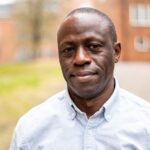
Martin Lawoko is a Professor of Wood Chemistry at Royal Institute of Technology (KTH), Sweden. His research addresses fundamental and applied science of Lignocellulosic materials. This includes the following areas: (1) Understanding the chemistry and function of the different plant cell wall polymers; (2) Development of protocols for the detailed analysis of lignin structure, assembly and reactivity; (3) Deeper insights into lignin extraction processes with special emphasis on understanding mechanisms that align with lignin reactivity. (4) Adoption of green chemistry and sustainable chemistry approaches for the synthesis of novel lignin-based materials; (5) Understanding structure-property relationships in lignin-based materials.
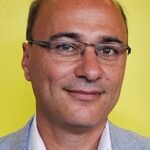
Pedro Fardim is a Professor of Chemical Engineering for Health and Care at KU Leuven, Belgium. He is affiliated with the Bio- & Chemical Systems Technology, Reactor Engineering and Safety (CREaS) group within the Department of Chemical Engineering, Faculty of Engineering Science. Prof. Pedro Fardim committed to creating sustainable technologies to support our planet and human health. President of EPNOE Association, Fellow of the Royal Society of Chemistry and the International Academy of Wood Science. He published more than 150 papers and gave more than 100 invited talks. Twitter: @Chemenghealth Web: www.pedrofardim.eu

Giada Lo Re is an Associate Professor at the Department of Industrial and Materials Science at Chalmers, Sweden and the Department of Civil and Industrial Engineering, Pisa University, Italy. Giada Lo Re centres her research interests on understanding processing-structure-properties relationships of sustainable polymeric and (nano)composite materials at macro, molecular and nanoscale. Her expertise ranges from polymer physics to polymer chemistry and processing. She has been laureated with the 2012 graduate award for the best Thesis in Chemical Engineering and Materials Science (AIMAT, Italy) and awarded the Green Materials Prize 2016 (Institution of Civil Engineers in London, UK). She serves as an expert evaluator on behalf of the Natural Sciences and Engineering Research Council of Canada (NSERC), French National Research Agency (ANR), and for the EU Commission.
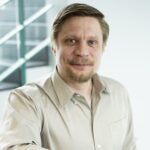
Timo Leskinen is an Assistant Professor at University of Helsinki, Finland. Timo Leskinen has made a career in the field of wood polymers, their analyses, and processing. He has PhD in Forest biomaterials and has worked around topics of wood pretreatments, enzymatic hydrolysis, and lignin valorization in both academy and industry. In 2023 he returned to University of Helsinki to develop teaching related to circular economy and sustainable materials, while leading the Chemistry of Circular Economy research group. The group’s research is currently focused on the development of lignin-based thermoplastics and general sustainability themes affiliated to polymer field.
Local organizing committee:
Prof. Chunlin Xu, Åbo Akademi University
Prof. Patrik Eklund, Åbo Akademi University
Prof. Henrik Grénman, Åbo Akademi University
Dr. Hao Zhang, Åbo Akademi University
Contact: Prof. Chunlin Xu, chunlin.xu@abo.fi, Åbo Akademi University